YC Startup Salary Report 2026: $185K Median Pay by Role
YC Startup Salary Report 2026: $185K Median Pay by Role
Data as of October 22, 2026 · updated monthly
Cite as: udreamjob YC Startup Salary Report, October 2026: the median posted salary at Y Combinator startups (200 or fewer employees) is $185,000 (n=2,180 USD ranges). Our own analysis of public job boards, not official Y Combinator data.
If you are holding an offer from a venture-backed company, the hard part is not the number. It is knowing whether the number is fair. Most advice about startup salary is anecdote. This report uses data instead: 2,180 posted pay ranges at startups backed by Y Combinator, broken down by role, seniority, workplace type, AI focus and team size.
Use the bands below as a benchmark. Find your role, find your seniority, and see where your offer falls against what these companies are advertising.
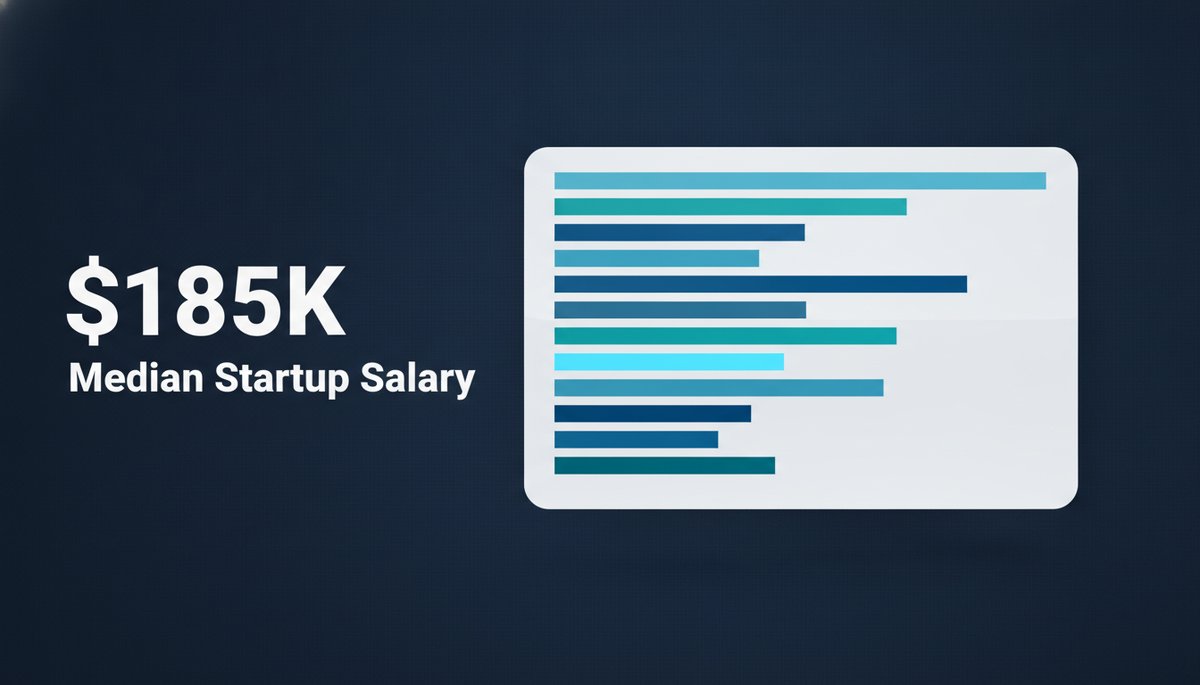
Quick Answer: In our October 2026 analysis of YC startup job postings, the median posted salary is $185,000 (middle half: $145,000 to $225,000; n=2,180). Role matters most: product roles post a $215,000 median, customer success and support $141,500.
Key findings
- Overall: median $185K; p25 $145K; p75 $225K (n=2,180).
- Top-paid functions: product ($215K) and data, ML & research ($212.5K), ahead of engineering ($200K).
- AI vs non-AI: AI startups post a median of $195K versus $175K for non-AI startups, about 11% higher.
- Workplace: remote $170K, on-site $187.5K, hybrid $200K.
- Equity: 45.5% of startup postings mention it. This report does not measure how much.
How we built this report
Methodology
- We analyzed 6,458 distinct open postings on the public job boards (Ashby, Greenhouse and Lever) of 452 YC companies whose boards we could resolve, collected October 22, 2026.
- The company list comes from the yc-oss directory mirror of YC's public company list. Jobs come from each company's own public job board.
- 49.8% of postings listed a salary. Figures are midpoints of posted ranges, annualized (hourly rates multiplied by 2,080), USD postings only.
- "Startups" means companies with 200 people or fewer. Larger YC scale-ups are excluded from every salary table below because a few boards with hundreds of openings would dominate the results.
- Cells with fewer than 10 postings are omitted. Each table shows its sample size (n).
- This is not official Y Combinator data and not accepted-offer data.
Dollar figures are rounded to the nearest $0.5K. "p25" and "p75" are the 25th and 75th percentiles: a quarter of postings sit below p25 and a quarter above p75. For a wider look at remote listings, see our remote hiring data study.
How does this differ from other startup salary benchmarks?
Other public benchmarks measure different things. Levels.fyi says it collects pay data from the individuals earning it, not from employers, and weights submissions by proof such as offer letters and pay stubs. Wellfound shows salary ranges that companies provide directly and labels estimates built from comparable listings as "Wellfound Est." Our figures are neither: they are the midpoints of ranges that companies themselves published on their own job boards, with no estimates filled in. That makes them a view of what startups say they will pay, not of what people were paid, so expect real offers and reported compensation to differ.
Does Y Combinator set employee salaries?
No. Each YC-backed company sets its own pay, and the figures in this report come from those companies' own job postings, not from YC. YC's standard deal is an investment in the company. On its deal page, YC says it invests $500,000: $125,000 for a fixed 7% of the company, plus $375,000 on a SAFE that converts at a later funding round. Founder pay and YC's deal terms are a separate question from what these companies post for employees, so keep the two apart when you read "y combinator startup salary" results.
How much do startups pay employees? Startup salary by role
In our October 2026 analysis of YC startup job postings, the overall median posted salary is $185,000 (p25 $145,000, p75 $225,000, n=2,180). The spread by function is wide, from $85,000 in clinical healthcare roles to $215,000 in product.
| Role | n | p25 | Median | p75 |
|---|---|---|---|---|
| Product | 101 | $189K | $215K | $238K |
| Data, ML & research | 159 | $177.5K | $212.5K | $250K |
| Engineering | 735 | $170K | $200K | $236.5K |
| Design | 98 | $159.5K | $195K | $214K |
| Finance & legal | 66 | $140.5K | $186K | $220.5K |
| Sales | 346 | $130K | $175K | $233K |
| Marketing | 134 | $130.5K | $161K | $190.5K |
| Operations | 175 | $102.5K | $150K | $187.5K |
| People & recruiting | 63 | $115K | $145K | $185K |
| Customer success & support | 112 | $105.5K | $141.5K | $195K |
| Healthcare (clinical) | 45 | $48.5K | $85K | $104K |
Source: our analysis of posted USD salary ranges at YC startups (200 people or fewer), as of October 22, 2026. Excludes 146 postings classified as "other."
Two things stand out. First, sales has a wide spread: a $103K gap between its p25 and p75 may reflect variable-pay structures. Always ask whether the figure you are shown is base pay or includes commission or bonus. Second, the data and ML row is the one to watch if you are moving into the field; the data analyst career path is a good primer on how those roles progress.
If product is your target, landing a remote product management role covers how to get in the door.
What is the average startup software engineer salary?
In our October 2026 analysis of YC startup job postings, the median posted software engineer salary is $200,000 (p25 $170,000, p75 about $236,500, n=735), though the answer shifts sharply with seniority. Engineering is the largest salaried category in our sample, so these numbers are the most stable in the report.
| Engineering level | n | p25 | Median | p75 |
|---|---|---|---|---|
| Mid-level | 390 | $157.5K | $185K | $215.5K |
| Senior | 198 | $185K | $205K | $230K |
| Staff and above | 83 | $215K | $250K | $287.5K |
| Engineering manager | 27 | $230K | $250K | $280.5K |
| Director and above | 20 | $228K | $267.5K | $311K |
Source: same dataset; startup engineering postings by seniority as of October 22, 2026. Interns (n=10) not shown; no junior row met the 10-posting minimum.
The notable jump is senior to staff: the median rises $45,000, from $205K to $250K, and the p25 for staff ($215K) sits near the senior p75 ($230K) with only a $15K gap. The step from mid to senior is much smaller, at $20K. If you are a senior engineer being offered a "senior" title at a figure near the staff band, you may be leveling below your scope. If you are interviewing, prepare for a startup technical interview with level expectations in mind.
The startup senior software engineer salary band in this data runs from $185K at p25 to $230K at p75.
Is remote, hybrid or on-site startup pay higher?
In our October 2026 analysis of YC startup job postings, hybrid roles carry the highest median posted salary ($200K), on-site is next ($187.5K), and remote is lowest ($170K). That pattern is driven partly by role mix, so look at your own function before drawing conclusions.
| Workplace | n | p25 | Median | p75 |
|---|---|---|---|---|
| Hybrid | 378 | $157K | $200K | $239K |
| On-site | 1,097 | $145K | $187.5K | $230K |
| Remote | 396 | $125K | $170K | $210K |
Source: same dataset, postings that state a work arrangement. A further 309 postings did not state one and are not shown.
Role-level cuts suggest the story is not uniform. These cells are small, so treat them as directional:
| Role | Remote median (n) | Hybrid median (n) | On-site median (n) |
|---|---|---|---|
| Engineering | $190K (113) | $221K (130) | $201K (384) |
| Product | $225K (20) | $217K (26) | $217.5K (41) |
| Marketing | $170K (25) | $159K (28) | $160K (68) |
| Data, ML & research | $194K (24) | $209K (32) | $250K (77) |
| Operations | $102.5K (23) | $150K (21) | $152.5K (106) |
Source: same dataset. Small cells; read as directional.
Posted ranges suggest that remote engineering pays about $11K less at the median than on-site and $31K less than hybrid. They also suggest the opposite for product (n=20 remote vs. 41 on-site) and marketing (n=25 vs. 68), where remote medians were higher. With samples this small, a handful of postings can move a median, so do not treat any one cell as a rule.
Overall, 27.1% of startup postings that state a work arrangement are remote. For more on that market, see remote software engineering jobs.
Do AI startups and small teams pay more?
In our October 2026 analysis of YC startup job postings, AI startups post a median of $195K versus $175K at non-AI startups, roughly 11% more. The bands overlap heavily, so an AI label alone does not predict your pay.
| Startup type | n | p25 | Median | p75 |
|---|---|---|---|---|
| AI | 1,095 | $150.5K | $195K | $232.5K |
| Non-AI | 1,085 | $135K | $175K | $213K |
Source: same dataset. AI vs non-AI is our classification of each company.
If AI skills are part of your pitch, read the AI skills salary premium for how to frame them.
Team size shows an unexpected shape:
| Team size | n | p25 | Median | p75 |
|---|---|---|---|---|
| 1-10 people | 328 | $155K | $193.5K | $237.5K |
| 11-50 people | 995 | $140K | $175K | $215K |
| 51-200 people | 857 | $143.5K | $189K | $230K |
Source: same dataset.
The pattern is U-shaped: the tiniest teams and the larger ones post more than the middle. We do not know why from this data. One plausible reading is that the smallest teams pay up for early hires and the largest have more funding, but that is a hypothesis, not a finding.
Do startups offer equity?
In our October 2026 analysis of YC startup job postings, 45.5% of startup postings mention equity in some form. Our dataset does not capture equity amounts, so there is nothing here to benchmark them against. Any figure you see quoted for "typical startup equity" did not come from this report.
That makes equity the part of your offer you must interrogate yourself. Ask:
- How many shares or options, and what percentage of fully diluted shares does that represent?
- What is the strike price, and when was the last 409A valuation or funding round?
- What is the vesting schedule, including any cliff?
- What happens to vested and unvested options if you leave or the company is acquired, and how long do you have to exercise?
Treat equity as a lottery ticket until the answers say otherwise. Compare base salary to the bands above on its own merits.
How do I use these bands on a startup offer?
Match your role and level to the closest row, then check where your base falls between p25 and p75. An offer under the p25 for your role is worth questioning; one between the median and p75 is competitive for a posted range.
- Compare base to base. Confirm whether the number you were given includes bonus or commission.
- Check your leveling. The senior-to-staff jump shows how much a title can move the median.
- Anchor to the market. Asking where in the posted range you fall, and why, is a stronger opener than a personal number. Where the law requires ranges in postings, read how pay-transparency laws give you negotiation leverage.
- Weigh the whole package. Equity, benefits, remote terms and runway are not captured by a salary range, and equity terms belong in writing.
- Remember the ceiling. These are advertised ranges; negotiated outcomes can land above or below.
Limitations: what this report cannot tell you
We would rather you trust the numbers within their limits than over-trust them.
- Coverage is partial. We resolved public job boards for 452 of the 1,491 YC companies hiring, on three applicant-tracking systems.
- Half of postings lack a salary. Only 49.8% listed one, so companies that publish pay may differ from those that do not.
- Posted is not paid. We use the midpoint of an advertised range. Final offers and total compensation can differ.
- USD only. Postings in other currencies are excluded.
- A snapshot. This is one day of open postings. We refresh monthly, and we make no claims here about hiring speed or how long roles stay open.
- Small cells. Cells under 10 postings are omitted, but cells just above that threshold are still noisy.
The bottom line on startup salary
Do startups pay well? Among the YC startups that publish a salary (about half of postings), the posted median is $185,000, and well above that for product, data and engineering. That is not all startups, and it is advertised pay, not actual pay. The right benchmark is your role, level and workplace, not the overall number. Use the tables above, ask questions about equity, and check back before your next offer conversation: we update this report monthly.
Frequently Asked Questions
How much do YC startups pay employees?
What is the average startup software engineer salary?
Do startups offer equity?
Do remote startup jobs pay less?
Does Y Combinator set employee salaries?
Related Posts

AI + Careers Briefing — November 5, 2026

AI + Careers Briefing — November 4, 2026