How to Land a Remote Product Management Job in 2026
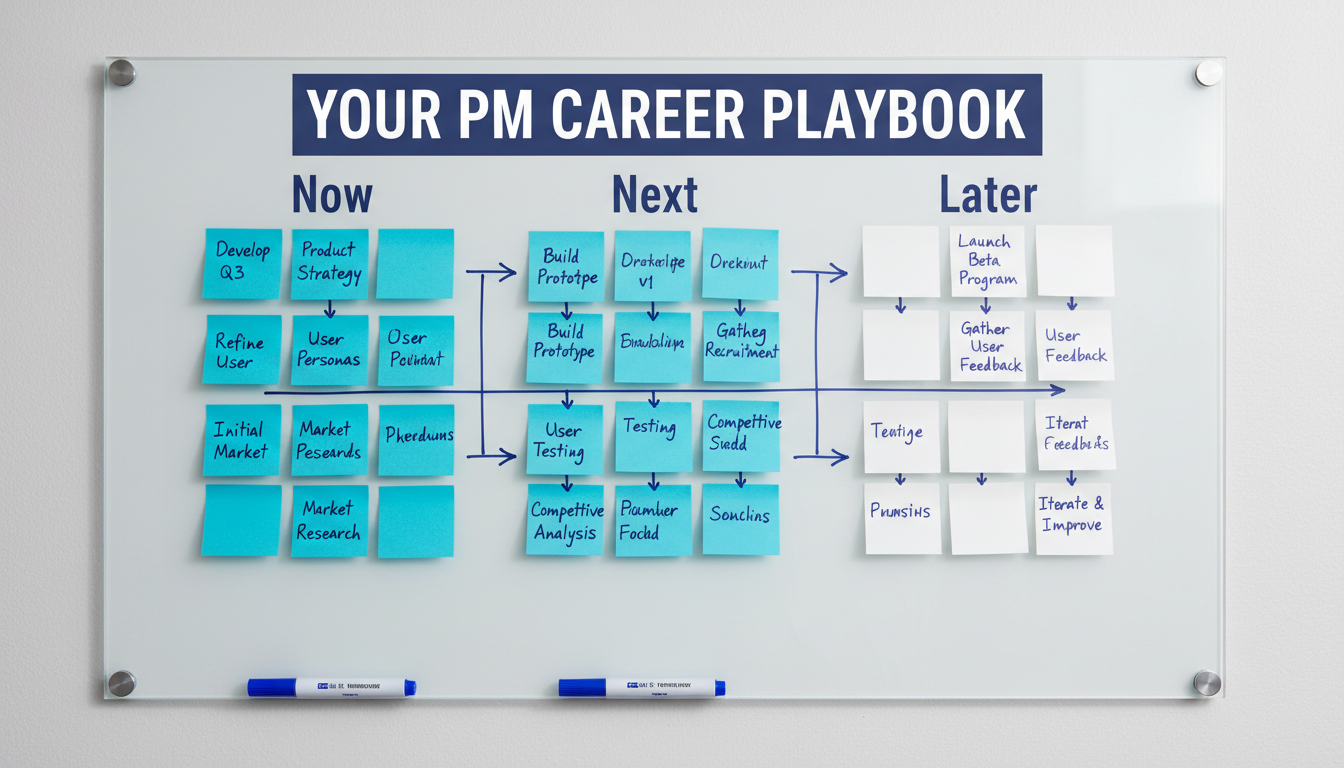
How to Land a Remote Product Management Job in 2026
Product management has become one of the most sought-after roles in tech — and in 2026, more companies than ever are hiring PMs to work entirely remotely. The catch? So is everyone else. The applicant pool for remote PM roles is global, the expectations are higher, and the interview process is more rigorous than it was even two years ago.
This guide gives you the complete playbook: the skills hiring managers prioritize, how to position your resume when you don't have "Product Manager" in your title yet, where the best remote PM jobs are posted, how to handle the interview gauntlet, and a 90-day plan to go from "interested in PM" to "offer in hand."
Disclosure: This post contains affiliate links. If you make a purchase through these links, we may earn a small commission at no extra cost to you. We only recommend products we genuinely believe in.
Browse 152 remote Product roles on udreamjob.com to see what's available right now.
What Product Managers Actually Do (And Why Companies Want Them Remote)
Before optimizing your resume or prepping for interviews, you need a clear picture of what the role actually demands — because "product manager" means different things at different companies.
At its core, a product manager owns the why and the what of a product. You define which problems to solve, prioritize features based on user data and business goals, and coordinate engineering, design, and marketing to ship outcomes — not just features.
In a remote context, three things shift:
Written communication becomes your primary tool. You're not stopping by someone's desk. Product specs, decision memos, async standups, and Loom walkthroughs replace hallway conversations.
Stakeholder management scales up. Remote PMs often work across time zones, which means your ability to align teams without being in the same room is non-negotiable.
Autonomy expectations increase. Remote-first companies hire PMs who can identify problems, make prioritization calls, and drive execution without waiting for a manager to assign tasks.
This is why the product manager career path in 2026 increasingly favors candidates who demonstrate self-direction, strong async skills, and data fluency — regardless of whether they came from a traditional PM background.
Is Product Management Right for You?
Not everyone who's drawn to PM actually enjoys the work. Before investing months in a transition, pressure-test the fit.
PM might be right for you if:
You naturally gravitate toward solving problems at the intersection of business, technology, and user needs
You get energy from coordinating across teams, not just individual contribution
You're comfortable making decisions with incomplete information
You enjoy writing — specs, strategy docs, user stories, emails — as much as talking
PM might not be right for you if:
You want deep technical or creative ownership (engineering or design may be better fits)
Ambiguity drains you rather than motivates you
You prefer heads-down execution over cross-functional facilitation
If you haven't already assessed where your strengths and interests intersect, choosing a career path and committing to it is worth doing before you go further. A PM transition is entirely achievable — but it's a significant investment, and clarity upfront saves months of false starts.
The Skills That Get You Hired as a Remote PM
Hiring managers evaluating remote PM candidates look for a specific blend of hard and soft skills. Here is what actually moves the needle in 2026.
Hard Skills
Data analysis and SQL. You don't need to be a data scientist, but you need to pull your own data, define metrics, and make data-informed prioritization calls. Comfort with SQL, basic Python, or analytics tools like Amplitude or Mixpanel is expected.
Product discovery frameworks. Know how to run user interviews, define jobs-to-be-done, and validate hypotheses before committing engineering resources. Companies want PMs who reduce waste, not PMs who guess.
Roadmapping and prioritization. RICE, impact-effort matrices, outcome-driven roadmaps — you need a structured approach to deciding what gets built and what doesn't.
Technical literacy. You're not writing code, but you need to understand APIs, system architecture, and deployment pipelines well enough to have credible conversations with engineers.
AI fluency. In 2026, every PM is expected to understand how AI features work, how to evaluate AI-generated outputs, and how to integrate AI capabilities into product strategy.
Soft Skills (That Remote Amplifies)
Async communication. Your product specs, Slack messages, and Notion docs are your leadership presence. Clear, concise writing is the single most important remote PM skill.
Stakeholder alignment. You'll manage competing priorities from engineering, design, sales, and leadership — often across time zones.
Influence without authority. PMs don't have direct reports. You lead through clarity, data, and trust.
Pro tip: If you're building PM skills from scratch, focus on data analysis and product discovery first. These are the hardest to fake in interviews and the most transferable from adjacent roles.
If you're looking to sharpen specific skills through structured learning, platforms like Domestika offer focused courses in areas like design thinking, UX research, and data storytelling — all of which strengthen a PM skill set.
Remote Product Manager Salary: What to Expect in 2026
Compensation for remote PMs varies significantly by experience level, company stage, and geography — but the overall trend is upward.
Typical salary ranges for remote PM roles in the US market:
Level | Base Salary Range | Total Comp (with equity/bonus) |
|---|---|---|
Associate PM | $85,000 – $115,000 | $95,000 – $135,000 |
Product Manager (mid) | $120,000 – $165,000 | $140,000 – $200,000 |
Senior PM | $155,000 – $200,000 | $180,000 – $280,000 |
Director/Group PM | $190,000 – $250,000+ | $250,000 – $400,000+ |
Key factors that influence your number:
Company stage. Startups pay less base but may offer meaningful equity. Public companies pay higher base with more predictable total comp.
Industry. Fintech, healthtech, and AI/ML companies tend to pay at the top of the range.
Location-adjusted pay. Some companies (GitLab, Buffer) use location-based pay bands. Others (Airbnb, Spotify) pay the same regardless of location. Know which model a company uses before negotiating.
Your prior role. Career changers entering as Associate PMs will start at the lower end. Experienced PMs transitioning from on-site to remote should not accept a pay cut just for the flexibility.
How to Position Your Resume (Even Without PM Experience)
Most successful product managers didn't start with "Product Manager" on their resume. They transitioned from engineering, design, marketing, consulting, or operations. The key is translating your existing experience into PM language.
The Translation Framework
For each role on your resume, rewrite bullet points to emphasize:
Outcomes over activities. Not "managed a team of 5" but "led cross-functional initiative that increased user retention by 18%."
Data-driven decisions. Show that you used metrics to guide priorities, not just intuition.
Cross-functional collaboration. Any experience coordinating across teams — engineering, sales, marketing, operations — maps directly to PM work.
User focus. Did you talk to customers? Analyze user feedback? Redesign a process based on pain points? That's product thinking.
Resume Essentials for Remote PM Roles
Lead with a PM-focused summary. Two to three sentences that position you as a product thinker, not just your current title.
Include a "Product Skills" section. List tools (Jira, Linear, Figma, Amplitude, SQL) and frameworks (RICE, Jobs-to-Be-Done, OKRs).
Highlight remote-specific wins. Managed a distributed team? Led an async product launch? Built documentation systems? These signal remote readiness.
Add a portfolio link. Even one well-documented product case study can differentiate you from dozens of other applicants. Detail the problem, your approach, decisions made, and measurable outcomes.
If you're actively applying, make sure your broader job search strategy leverages AI tools to optimize your resume for ATS systems and track your pipeline.
Where to Find Remote Product Management Jobs
Not all job boards are equal. Here is where remote PM roles consistently appear in 2026.
Dedicated remote job boards:
FlexJobs — curated, vetted remote listings with strong PM and tech management categories. Worth the subscription if you're serious about a remote search, since every listing is verified and scam-free.
udreamjob.com — browse 152 remote Product roles and 284 Manager-level positions, with new listings added regularly.
Company career pages (remote-first companies):
These companies consistently hire remote PMs: GitLab, Automattic, Zapier, Buffer, Basecamp, Shopify, HubSpot, Atlassian, Stripe, and Figma. Bookmark their career pages and check weekly.
General platforms with strong remote filters:
LinkedIn (use "Remote" location filter), Indeed, and Glassdoor all surface remote PM roles, but require more filtering. Set up alerts with specific keywords: "remote product manager," "distributed product manager," "product manager anywhere."
Networking channels:
Lenny's Newsletter / Lenny's Job Board — the most PM-specific job board in the industry
Mind the Product community and Slack
Product Hunt for startup PM roles
Pro tip: The best remote PM jobs often never hit public boards. Invest 30% of your search time in direct outreach: identify companies building products you care about, find the VP Product or hiring manager on LinkedIn, and send a concise note with a specific insight about their product.
How to Ace the Remote PM Interview
Remote PM interviews in 2026 typically run four to six rounds. Here is what to expect and how to prepare for each.
Round 1: Recruiter Screen (30 min)
Standard fit check. Know the company's product, articulate why PM, and have your transition story tight. For career changers, rehearse a 60-second version of: "Here's what I did, here's the PM skill it maps to, here's why I'm making the switch."
Round 2: Hiring Manager (45-60 min)
Deep dive into your product thinking. Expect questions like:
"Tell me about a product decision you drove and how you measured success."
"How would you prioritize these five features?" (they'll give you a scenario)
"Describe a time you had to align stakeholders who disagreed."
What they're evaluating: structured thinking, data orientation, communication clarity, and whether you can prioritize ruthlessly.
Round 3: Product Case Study (60 min)
This is the make-or-break round. You'll be given a prompt — "Design a feature for X" or "How would you improve Y's onboarding?" — and expected to walk through your approach live.
The winning structure:
Clarify the problem and user segment (2 min)
State your goal and success metrics (2 min)
Generate 3-4 solution directions (5 min)
Prioritize with a framework and defend your choice (5 min)
Define MVP scope and rollout plan (5 min)
Discuss risks and how you'd validate (3 min)
Round 4: Technical Depth (45 min)
Not a coding interview, but you'll be asked to discuss system design tradeoffs, API design decisions, or how you'd instrument analytics for a feature. The goal is verifying you can collaborate credibly with engineers.
Round 5: Cross-Functional / Values (45 min)
Behavioral round with a designer, engineer, or marketing lead. They're assessing whether you'll be a good partner. Show genuine curiosity about their craft and demonstrate that you value collaboration over top-down direction.
Pro tip: For remote interviews, your setup matters. Use a clean background, good lighting, a reliable microphone, and test your screen-sharing workflow before the call. Fumbling with Zoom or Google Meet in a PM interview signals a lack of remote readiness.
Your 90-Day Action Plan
Knowing what to do is not the same as doing it. Here is a concrete timeline to go from "considering PM" to competitive candidate.
Days 1-30: Foundation
Audit your existing skills against the PM requirements above — identify your top 3 strengths and 2 biggest gaps
Start a daily writing habit: product teardowns, feature analyses, or strategy memos (these become your portfolio)
Complete one structured learning module on product discovery or data analysis
Begin setting career goals that actually drive results — define your target role, company size, and compensation floor
Days 31-60: Build and Practice
Complete 2-3 product case studies and publish them (Medium, personal site, or Notion)
Practice product sense interviews with a partner or mock interview service
Join 1-2 PM communities (Mind the Product, Lenny's Slack) and contribute genuinely
Rewrite your resume using the translation framework above
Set up job alerts on FlexJobs, LinkedIn, and udreamjob.com
Days 61-90: Apply and Iterate
Apply to 5-10 roles per week, prioritizing companies whose products you've analyzed
Send 3-5 direct outreach messages to hiring managers weekly
Track your pipeline: applications sent, screens scheduled, case studies completed
After every interview, write down what went well and what to improve — then actually improve it
Revisit your case study portfolio and add any new insights from real interviews
This is not a passive process. The candidates who land remote PM jobs are the ones who treat their job search like a product launch — with clear metrics, iteration cycles, and a bias toward action.
Adjacent Paths Worth Considering
Product management isn't the only remote-friendly tech career with strong demand. If you're exploring options, consider how PM compares to remote software engineering roles, which offer deeper technical ownership and often higher starting compensation — though with less cross-functional breadth.
The right choice depends on whether you're energized by building things yourself or by deciding what gets built and why.
Start Now
The remote product management market in 2026 rewards candidates who show up prepared — with a portfolio, a clear transition story, and product skills they can demonstrate, not just list. Every week you spend building that evidence is a week closer to an offer.
Browse remote Product Manager roles on udreamjob.com and start matching your skills to real openings today.
Frequently Asked Questions
What skills do I need to get a remote product manager job in 2026?
How has remote product management changed compared to previous years?
What does a product manager actually do in a remote work environment?
How do I know if product management is the right career for me?
Do I need prior product manager experience to land a remote PM job?
Related Posts
AI + Careers Briefing — October 13, 2026

AI + Careers Briefing — October 12, 2026