
Seasonal Jobs 2026: Why Sept-Oct Beats November
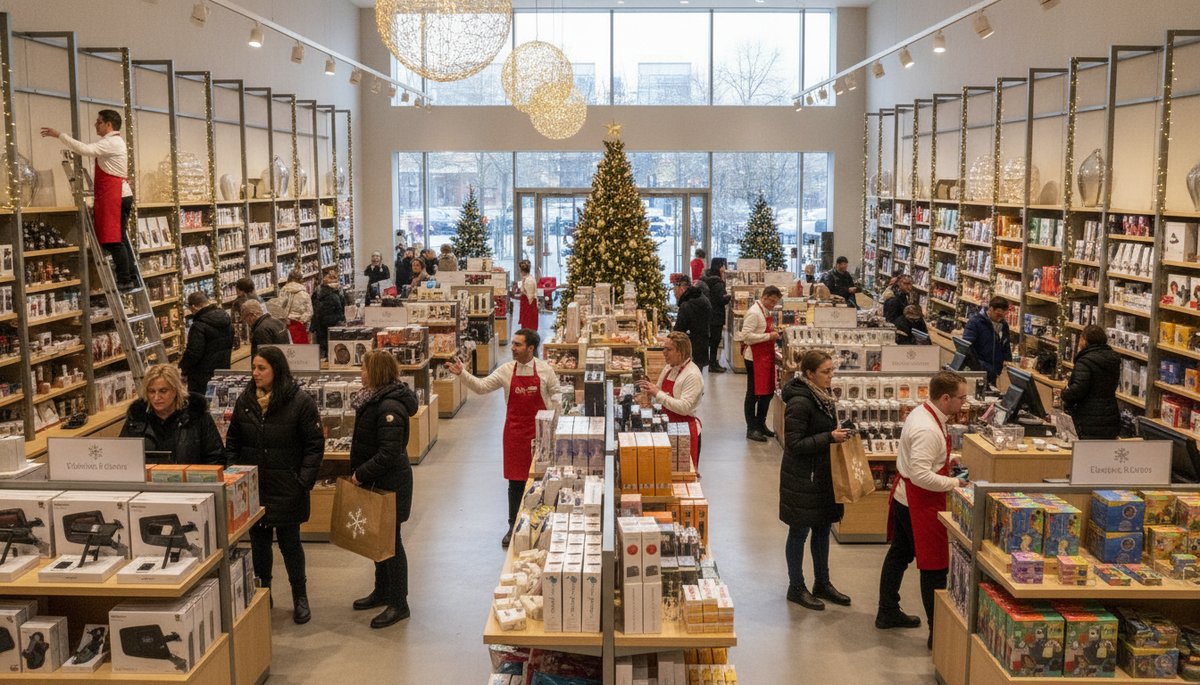
The 2026 holiday hiring window opened in earnest this month, and if you're waiting until Black Friday week to start applying, you're already behind. Spirit Halloween has confirmed more than 52,000 seasonal hires for this season, and the retailers, warehouses, and delivery networks that hire the bulk of holiday seasonal workers are rolling out their own numbers through the rest of September and October. Here's where the real 2026 seasonal jobs are, what they actually pay, and — the part that matters most if you're thinking beyond December — how to turn one into a permanent offer.
When should you apply for holiday jobs?
Apply now, in September or October — not in November. Retailers historically open their seasonal hiring campaigns in early-to-mid September (Bath & Body Works opened its 2025 campaign on September 8, Michaels on September 5, Macy's and Target both in mid-to-late September in recent cycles), and the earliest applicants get first pick of shifts, locations, and role types.
By the time headlines about "holiday hiring" start running in November, most of the good shifts at the closest locations are already claimed, and what's left tends to be the least convenient slots — split shifts, overnight stocking, or stores further from home. Applying in the Sept-Oct window also gives you time to get through onboarding and training before the actual volume surge hits in November, which matters if you want to be fully ramped up (and noticed) by the time management is deciding who gets asked to stay on. If you're job hunting more broadly this month, the same early-mover logic applies — see our September hiring surge playbook for how to work the wider post-summer hiring ramp, not just seasonal roles.
Which companies are hiring seasonal workers in 2026?
Spirit Halloween is the clearest confirmed 2026 number so far: more than 52,000 seasonal associates across over 1,575 stores in the U.S. and Canada, announced in a June 2026 press release. Most of the other major seasonal employers — Amazon, Target, Macy's, Bath & Body Works, Michaels, UPS — hire tens of thousands of workers most years, but as of this writing (mid-September 2026) several hadn't yet published their specific 2026 headcount; their most recent confirmed numbers are shown below so you know the scale to expect while you watch for the 2026 update on each company's own careers page.
Announced seasonal hiring, most recent confirmed figures
| Employer | Announced seasonal hires | Role types | Source |
|---|---|---|---|
| Spirit Halloween | 52,000+ (2026 season, confirmed) | Store associates, assistant/store/zone managers | PR Newswire, Jun 11 2026 |
| Amazon | 250,000 (2025 season; 2026 figure not yet announced) | Fulfillment center, delivery/transportation, seasonal customer service | About Amazon, Oct 2025 |
| Target | 100,000 (2024 season; 2025 campaign leaned more on existing "On Demand" staff instead of a fresh headline number) | Store, order pickup/drive up, supply chain | Retail Dive, Sept 2024; Marketplace, Nov 2025 |
| Macy's | 31,500+ (2024 season; no updated 2026 figure published yet) | Store and distribution center associates | BusinessWire, Sept 19 2024 |
| Bath & Body Works | 30,000+ (2025 season) | Store associates; merchandise processors/handlers at distribution centers | BBW newsroom, Sept 8 2025 |
| Michaels | 10,000+ (2025 season) | Seasonal store team members | PR Newswire, Sept 5 2025 |
| USPS | ~14,000 (2025 season, down from ~40,000 in earlier years) | Mail processing, carrier support | FedWeek, Oct 23 2025 |
Zoomed out, the macro trend backs up why you shouldn't assume any single employer's headcount is guaranteed to repeat: the National Retail Federation's most recent seasonal forecast put 2025 retail seasonal hiring at 265,000-365,000 workers, down from 442,000 in 2024 and the lowest total in roughly 15 years. Actual government data tells a similar story — Bureau of Labor Statistics figures show retail trade added about 492,000 seasonal workers between October and December 2024, below the pre-pandemic average buildup of roughly 605,000. None of this means seasonal jobs are disappearing; it means the volume is a little tighter than it used to be, which is one more reason to apply early rather than wait for the crowd.
Where the 2026 seasonal jobs actually are
Retail. Store-floor roles — cashier, stock/merchandising, guest services, seasonal specialty shops like Spirit Halloween — are still the largest single category, concentrated at big-box and mall retailers from September through December.
Warehouse and fulfillment. Amazon and other e-commerce operators staff fulfillment centers heavily for the Q4 order surge; these roles (picking, packing, sorting) tend to pay more than store-floor retail and often run longer hours in the weeks before Christmas.
Delivery and logistics. UPS has historically hired well over 100,000 seasonal package handlers, sorters, and delivery-support drivers for peak season, though the company hadn't published a specific 2026 national number as of this writing — worth checking directly given UPS has also announced broader network changes and permanent headcount reductions elsewhere in its business this year.
Hospitality and events. Hotels, restaurants, and event venues staff up for the holiday travel and gathering season. If you want a concrete example of how event-driven seasonal hiring actually works — pay, roles, and hiring timeline — our US Open 2026 seasonal jobs guide breaks down a real large-scale event hiring cycle you can use as a template for holiday hospitality roles too.
Customer service, including remote. Retailers and outsourced customer-experience firms staff up phone, chat, and email support for the return-and-exchange surge that follows the holidays — more on the remote side of this below.
How much do seasonal jobs pay?
Pay depends heavily on role type and location, but the confirmed numbers give a useful range: Amazon's most recently confirmed seasonal pay averaged over $19 an hour across its U.S. fulfillment and transportation network, and Target's seasonal starting pay has run $15 to $24 an hour depending on role and market. As a rough pattern, warehouse and fulfillment roles tend to pay more than store-floor retail positions, and roles requiring a specific skill (driving, tech support, bilingual customer service) usually sit at the higher end of an employer's posted range.
Beyond hourly pay, several employers also offer an employee discount (Bath & Body Works offers 40% off, Spirit Halloween 30% off) and some pay signing or completion bonuses for sticking through the full season — always worth asking about directly during your interview, since these aren't always listed in the initial job posting.
Can a seasonal job turn into a permanent one?
Yes — and this is the highest-leverage thing to understand before you take a seasonal offer. Michaels states it converted more than 50% of last year's seasonal in-store hires into permanent roles, and national Bureau of Labor Statistics data shows retailers have net-retained tens of thousands of seasonal workers past the holidays in each of the last several years, rather than laying everyone off in January the way they typically did before 2021.
To actually land the conversion:
- Say it out loud, early. Tell your hiring manager during onboarding — not in week eight — that you're interested in a permanent role if one opens up. Managers can't consider you for something they don't know you want.
- Show up for the hardest shifts. Reliability during the highest-stress weeks (the week of Black Friday, the week before Christmas) is what managers remember when headcount decisions get made in January.
- Ask directly in December, not January. By the time layoff decisions are being finalized, it's often too late to influence them. Ask your manager directly in early-to-mid December whether there's a path to a permanent position, and what it would take.
- Treat it as a foot in the door, not just a paycheck. A seasonal retail or warehouse job is a legitimate, low-friction way to get inside a company and build a track record — especially useful if you're newer to the workforce or switching industries. Our entry-level hiring playbook covers more ways to use exactly this kind of on-ramp when traditional entry-level postings are scarce.
Are there remote seasonal jobs?
Yes. Amazon posts remote seasonal customer service roles for its November-January peak, typically opening applications in late summer through early fall, and customer-experience outsourcers including Concentrix, Foundever, and TTEC regularly post remote, seasonal customer-service and technical-support positions tied to retail holiday demand (Concentrix, for example, has run seasonal remote customer service listings covering dozens of U.S. states and Canadian provinces). These roles typically require a quiet, dedicated home workspace, a reliable internet connection, and flexible availability across the holiday rush, including some evening and weekend coverage.
If remote work is your priority beyond just the holidays, it's worth understanding the broader remote hiring landscape too — our analysis of 2,337 live remote job listings breaks down which skills and functions are actually getting hired remotely in 2026, which can help you decide whether to angle a remote seasonal role toward something longer-term.
What the schedule actually demands
Before you accept a seasonal offer, know what you're signing up for. Most seasonal roles require blackout availability around Black Friday weekend and the week before Christmas — meaning requested time off during those windows is rarely approved. Expect variable, employer-driven scheduling rather than a fixed weekly routine, with shifts that can shift week to week based on store or warehouse volume. Retail and warehouse roles are physically demanding: extended standing, lifting, and repetitive motion are standard, and warehouse/fulfillment shifts in particular can run longer during the final weeks before Christmas. Remote customer-service seasonal roles trade the physical demands for intensity — high call/chat volume and shorter average handle times are the norm during peak weeks. Going in with accurate expectations on all of this is part of what makes you the kind of seasonal hire a manager wants to keep past January.
Frequently Asked Questions
When should you apply for holiday jobs?
Which companies are hiring seasonal workers in 2026?
How much do seasonal jobs pay?
Can a seasonal job turn into a permanent one?
Are there remote seasonal jobs?
Related Posts

AI + Careers Briefing — October 20, 2026

AI + Careers Briefing — October 19, 2026