AI + Careers Briefing — October 26, 2026
Today's four stories pull in different directions. One economist says AI hasn't paid off for big companies outside tech, while Toyota is about to spend billions a year on robots anyway. Employers are reorganizing around skills, and the rules meant to keep AI fair at work mostly leave workers out. For job seekers, the common thread is that the human part of the job is your best evidence: judgment, teaching and adapting.
Is AI actually paying off for employers outside big tech?
Apollo Global Management's chief economist, Torsten Slok, says AI has not improved the bottom line of any big corporation outside the tech industry, according to a TechCrunch report published Oct. 25 on a note he recently released. Slok looks at what he calls the S&P 493, meaning the S&P 500 minus Alphabet, Amazon, Apple, Meta, Microsoft, Nvidia and Tesla. In that group, profit margins and revenue per worker appear flat, and he says the technology "has delivered zero financial payoff to corporate America outside of tech."
He is skeptical that companies can turn cheap intelligence into higher margins. In his words, "AI may be a great calculator, but in business, intelligence is mostly judgment." One caveat: this is one economist's note as summarized by TechCrunch, which says Apollo used to own the outlet.
Why it matters for job seekers: Our read is that hiring managers may increasingly want proof that your AI work changed an outcome, not just that you can use a tool. Describe the process you changed and what moved, such as turnaround time, error rates or cost. Our guide to the AI skills salary premium covers which skills employers are paying for.
Source: TechCrunch
What does Toyota's $6.4 billion robot plan mean for factory jobs?
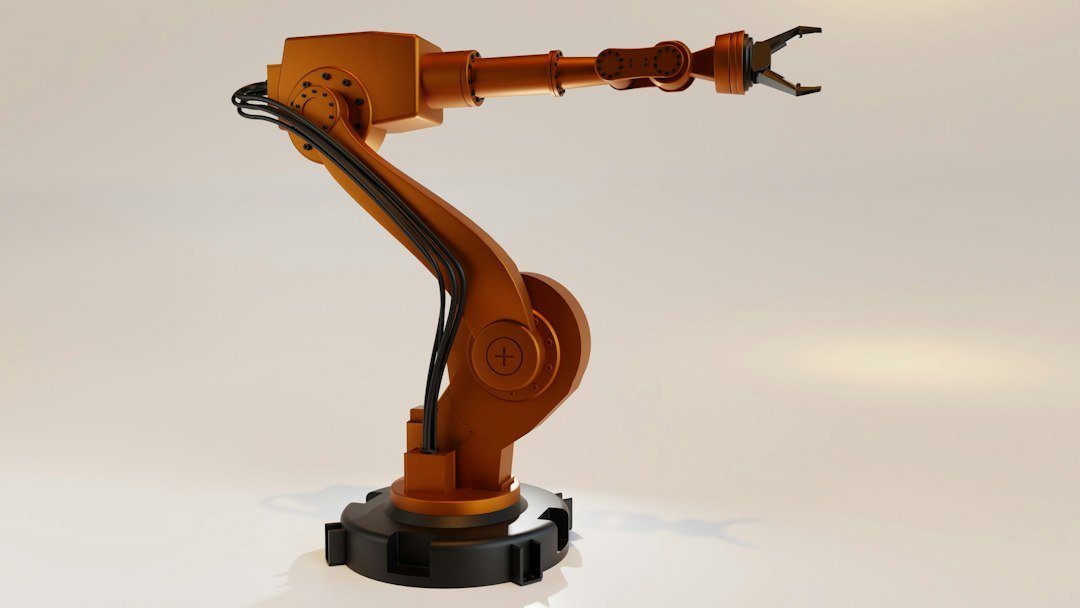
Toyota plans to deploy 400,000 robots as part of a $6.4 billion annual investment plan, according to The Decoder, which cited the Financial Times. Digital Today reports the spending starts in 2028 and covers about 150,000 robots at Toyota's auto plants and 250,000 at group facilities that make parts and materials. Toyota has not said what share of the future robots will be humanoid.
A Toyota executive says its own factories come first because the environment there is easier to control, per The Decoder. Investors are more cautious, pointing to past shortfalls with hydrogen cars and solid-state batteries. Digital Today reports that employees wear a jig that mimics a humanoid's finger structure to teach the robots tasks. It also notes that cost-efficiency versus human labor remains uncertain, and that Toyota's stated goal is robots that coexist with humans rather than replace them.
Why it matters for job seekers: Neither report gives hiring or layoff numbers, so any net job-loss claim would be speculation. What the reporting does show is that someone has to teach and supervise these machines, and Toyota's plan relies on its employees to do it. Hands-on production experience combined with some technical fluency is the asset here. See our guide to AI-proof career skills.
Sources: The Decoder · Digital Today
Will hiring and learning teams really merge into one function?
Korn Ferry says hiring, learning and workforce planning teams are set to merge into a single talent function in 2027, according to its 13th annual Talent Trends report, published Oct. 22. Of the more than 1,300 talent and senior leaders surveyed across more than 75 countries, 69 percent agreed that HR, talent acquisition, learning and development, and workforce planning will become one integrated function, HRD America reported.
The survey explains the push: 77 percent of leaders said capability gaps will be a bigger challenge than talent shortages, 78 percent said too few people are prepared for how work will be done, and 66 percent plan to invest heavily in reskilling. "The work people are being asked to do is evolving faster than many organisations are prepared for," said Jeanne MacDonald, CEO of recruitment process outsourcing at Korn Ferry.
Why it matters for job seekers: This is a survey of leaders' expectations, not a record of change. Still, if the people who hire and the people who train end up under one roof, our read is that applications may be judged more on what you can learn next. Describe your experience in capabilities, not just titles. Our guide to skills-based hiring shows how.
Source: HRD America
Do AI ethics guidelines protect workers?
Most don't reference worker protections, according to a new International Labour Organization working paper published in October 2026. It cites a review of 245 AI ethics guidelines: more than 60 percent discuss AI in the context of work, but fewer than 20 percent mention the ILO or its standards, HRD America reported. The authors, Jordi Agustí-Panareda and Daniel Samaan, wrote that "Much of the ethics discourse proceeds in isolation from the century-long normative architecture developed by the ILO."
The paper finds AI ethics focuses largely on individuals, while labour standards weight collective representation. The authors see no clear ethical equivalent for collective bargaining. Where AI informs hiring, performance evaluation or dismissal, they argue, employers need transparency about the data and reasoning so those decisions can be assessed for legal validity.
Why it matters for job seekers: A polished responsible-AI statement on a careers page may say little about worker-specific issues. Our suggestion is to ask directly in interviews whether AI screens applications or evaluates performance, and whether a person reviews those decisions. Note this is a working paper. The underlying review has not yet been published in the European Management Journal. Our guide to searching for jobs in the AI era covers the candidate side.
Source: HRD America
What to watch
- Whether Slok's "zero payoff" reading shows up in the next round of non-tech earnings, or gets challenged by other data.
- Any Toyota disclosure on how work will be split between people and robots before spending starts in 2028.
- Job postings for new titles such as head of skills, and whether those roles get real authority.
Related Posts

AI + Careers Briefing — October 25, 2026

AI + Careers Briefing — October 24, 2026