Learn Spanish for Travel in Mexico: World Cup 2026 Phrase Guide
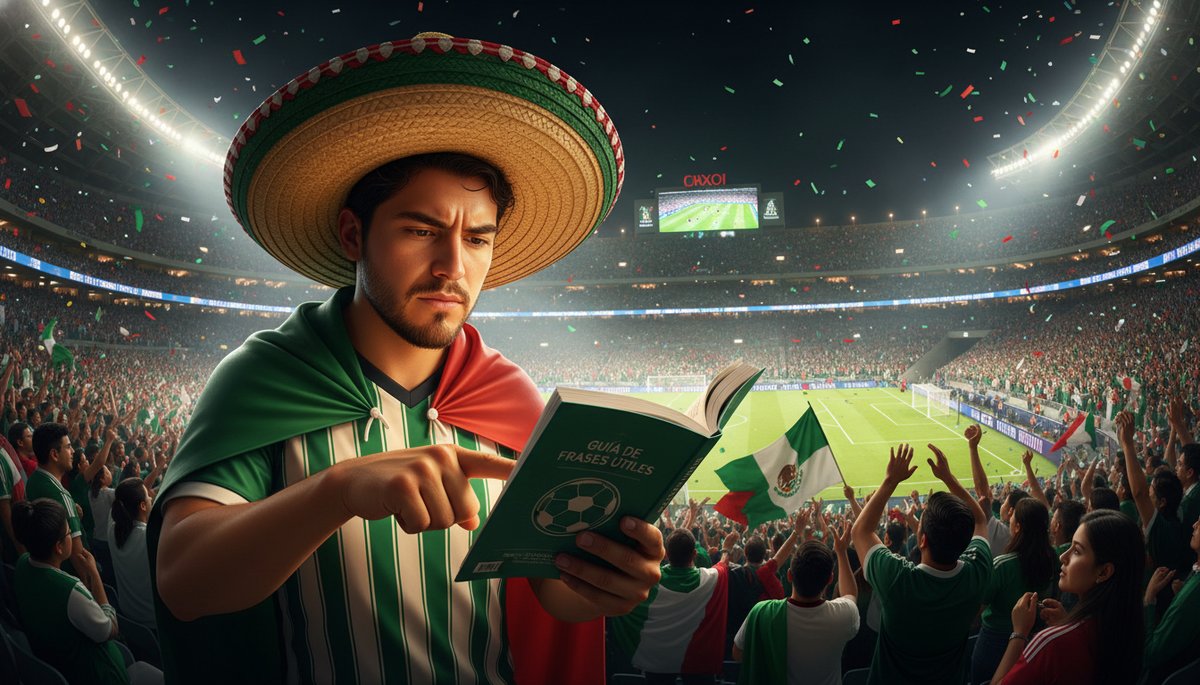
Learn Spanish for Travel in Mexico: World Cup 2026 Phrase Guide
The 2026 FIFA World Cup arrives in Mexico — and three cities are ready to host the world: Mexico City, Guadalajara, and Monterrey. If you have a ticket to any of these venues, knowing even a handful of Spanish phrases transforms the experience. You navigate faster, connect with locals more naturally, and sidestep the low-grade stress that comes with communicating through gestures alone.
This guide gives you a practical starter set of Spanish phrases — greetings, transit, stadium, food, and emergencies — organized by situation, with pronunciation notes tuned for Mexican Spanish specifically.
Quick Answer: The three Mexican host cities for World Cup 2026 are Mexico City, Guadalajara, and Monterrey. Spanish is the official language of Mexico; conversational English is available in hotel zones, but Spanish is the working language on the street, in markets, and at local restaurants. A focused 4–6 week preparation with 30 minutes of daily study plus a few weekly tutoring sessions is enough to handle most travel situations confidently.
Disclosure: This post contains affiliate links. If you make a purchase through these links, we may earn a small commission at no extra cost to you. We only recommend products we genuinely believe in.
The Three Mexican Host Cities, Briefly
Mexico City, Guadalajara, and Monterrey are each distinct in culture and character, but share one thing: Spanish is the language you need.
Mexico City (CDMX) hosts the tournament's opening match on June 11, 2026, at Estadio Azteca. It is the country's capital, a megacity of roughly 22 million people, and dense with culture, food, and transit. For travel logistics, see the World Cup 2026 in Mexico City travel guide.
Guadalajara is Mexico's second-largest city, home to mariachi, tequila country, and a strong local identity. Matches are played at Estadio Akron in Zapopan, on the city's western edge. Details are in the World Cup 2026 in Guadalajara travel guide.
Monterrey is Mexico's industrial and business capital, bordering Texas. It has the country's most US-influenced culture — English is more common here than in the other two cities — but Spanish is still the primary language everywhere outside business districts. See the World Cup 2026 in Monterrey travel guide for on-the-ground logistics.
Note on Mexican Spanish pronunciation: Mexico uses the Latin American 's' sound throughout. Where Spain Spanish uses a 'th' sound for the letters z and c (before e/i), Mexican Spanish replaces it with a clean 's'. So gracias is gra-SEE-as, not "gra-THEE-as." The accent is widely considered one of the clearest and most accessible for beginners.
Greetings and Everyday Exchanges
These are the phrases you will use dozens of times per day. Getting them right — and delivering them with a bit of warmth — earns instant goodwill.
| Spanish | Pronunciation hint | English |
|---|---|---|
| Hola | OH-lah | Hello |
| Buenos días | BWAY-nos DEE-as | Good morning |
| Buenas tardes | BWAY-nas TAR-des | Good afternoon |
| Buenas noches | BWAY-nas NOH-ches | Good evening / Good night |
| Por favor | por fah-VOR | Please |
| Gracias | gra-SEE-as | Thank you |
| De nada | de NAH-da | You're welcome |
| Disculpe | dis-KOOL-peh | Excuse me (to get attention) |
| Perdón | per-DON | Sorry / Pardon me |
| ¿Habla inglés? | AH-blah een-GLES? | Do you speak English? |
| No entiendo | no en-TYEN-do | I don't understand |
| ¿Puede repetir, por favor? | PWEH-de reh-peh-TEER, por fah-VOR? | Can you repeat that, please? |
Pro tip: Buenas alone (short for any of the three time-of-day greetings) is the natural, friendly greeting used throughout Mexico for any time of day.
Getting Around: Transit Phrases
Mexico City has an extensive metro system (the largest in Latin America). Guadalajara has a light rail. Monterrey has a two-line metro. In all three cities, rideshare apps (Uber operates across all three) reduce the need for Spanish, but local taxis and buses require it.
| Spanish | Pronunciation hint | English |
|---|---|---|
| ¿Dónde está la estación del metro? | DON-de es-TA la es-ta-SYON del MEH-tro? | Where is the metro station? |
| ¿Dónde está el estadio? | DON-de es-TA el es-TA-dyo? | Where is the stadium? |
| ¿Cuánto cuesta? | KWAN-to KWES-ta? | How much does it cost? |
| Un boleto, por favor | oon bo-LEH-to, por fah-VOR | One ticket, please |
| ¿A qué hora sale el próximo autobús? | ah KE OH-ra SA-le el PROX-ee-mo ow-to-BOOS? | What time does the next bus leave? |
| ¿Puede llevarme a esta dirección? | PWEH-de yeh-VAR-meh ah ES-ta dee-rek-SYON? | Can you take me to this address? |
| Pare aquí, por favor | PA-re ah-KEE, por fah-VOR | Stop here, please |
| A la izquierda / derecha | ah la ees-KYER-da / de-REH-cha | To the left / right |
| Recto | REK-to | Straight ahead |
Ordering Food and Drinks
Food in Mexico's three host cities is a genuine highlight of the trip — from tacos al pastor on a street corner in CDMX to birria in Guadalajara and cabrito in Monterrey. Restaurants in tourist zones often have English menus; local taquerías and markets usually do not.
| Spanish | Pronunciation hint | English |
|---|---|---|
| Una mesa para dos, por favor | OO-na MEH-sa PAH-ra dos, por fah-VOR | A table for two, please |
| ¿Me puede traer la carta? | meh PWEH-de tra-ER la KAR-ta? | Can you bring me the menu? |
| ¿Qué recomienda? | keh reh-ko-MYEN-da? | What do you recommend? |
| Quisiera… | kee-SYER-a | I would like… |
| Sin picante, por favor | seen pee-KAN-te, por fah-VOR | Without spice, please |
| La cuenta, por favor | la KWEN-ta, por fah-VOR | The bill, please |
| ¿Está incluido el servicio? | es-TA een-kloo-EE-do el ser-VEE-syo? | Is service included? |
| Agua, por favor | AH-gwa, por fah-VOR | Water, please |
| Dos cervezas, por favor | dos ser-VEH-sas, por fah-VOR | Two beers, please |
Match-Day and Stadium Phrases
The atmosphere inside a Mexican stadium is intense. A few football-specific phrases go a long way — both for practical navigation and for joining the chants.
| Spanish | Pronunciation hint | English |
|---|---|---|
| ¿Dónde está mi asiento? | DON-de es-TA mee ah-SYEN-to? | Where is my seat? |
| ¿Dónde está la salida? | DON-de es-TA la sa-LEE-da? | Where is the exit? |
| Una entrada, por favor | OO-na en-TRA-da, por fah-VOR | One ticket, please |
| ¿Dónde están los baños? | DON-de es-TAN los BA-nyos? | Where are the bathrooms? |
| ¡Vamos! | VAH-mos | Let's go! / Come on! |
| ¡Goool! | — | Goal! (held as long as possible) |
| ¡Qué golazo! | keh go-LA-so | What a great goal! |
| ¡Fuera! | FWEH-ra | Get out! (directed at opponent) |
| ¿Cuál es el marcador? | kwal es el mar-ka-DOR? | What is the score? |
Emergency and Safety Phrases
Know these before you need them.
| Spanish | Pronunciation hint | English |
|---|---|---|
| Necesito ayuda | neh-seh-SEE-to ah-YOO-da | I need help |
| Llame a la policía | YA-meh ah la po-lee-SEE-ah | Call the police |
| Llame a una ambulancia | YA-meh ah OO-na am-boo-LAN-sya | Call an ambulance |
| Me robaron | meh ro-BA-ron | I've been robbed |
| Estoy perdido/a | es-TOY per-DEE-do/da | I am lost |
| ¿Dónde está el hospital? | DON-de es-TA el os-pee-TAL? | Where is the hospital? |
| Soy alérgico/a a… | soy ah-LER-hee-ko/ka ah… | I am allergic to… |
Do You Need Spanish to Get Around Mexico's Host Cities?
English is available — but it is patchy. In upscale hotel zones and large chain restaurants, English-speaking staff are common. Step into a metro station, a local market, or a street-food stall and the working language is Spanish exclusively. A 2023 study estimated that only around 5% of Mexicans speak English, and that proportion is concentrated in formal tourism roles. In Mexico City's Polanco and Roma neighborhoods, and in Monterrey's business district, you will find more English than elsewhere — but at a packed stadium with 80,000 attendees, Spanish is the communication layer for everything from finding your gate to buying a snack. Translation apps help in calm, stationary moments; for fast-moving stadium and street situations, having phrases ready from memory is far more reliable.
Three Mexican Slang Phrases That Will Get You Instant Goodwill
Standard textbook Spanish works fine everywhere. But three informal expressions go a long way toward sounding like someone who prepared rather than someone who just landed.
- ¿Qué onda? (keh ON-da) — "What's up?" Used as a casual greeting at any time of day, by any age group. Opening a conversation with this instead of a stiff "Hola" signals genuine cultural awareness.
- Chido / Chida (CHEE-do / CHEE-da) — "Cool" or "awesome." Works for objects, food, places, and situations. If a local recommends a taquería and you try it, saying Está muy chido earns a smile every time.
- No hay bronca (no eye BRON-ka) — "No problem" / "No worries." The standard response to any minor inconvenience. Replacing a sheepish "Sorry, no hablo español" with No hay bronca closes interactions gracefully.
Keep these casual; they are not appropriate in formal or professional settings. Everywhere else around the stadium and on the street, they are exactly the right register.
Why One-on-One Tutoring Closes the Gap Fast
Affiliate link — I may earn a commission at no extra cost to you.
Apps like Duolingo are excellent for vocabulary building and habit formation. What they consistently miss is conversational speed — the ability to hear and respond to rapid, natural Mexican Spanish in real time.
A 2025 study of Preply learners found that students who completed 24 or more lessons over 12 weeks progressed roughly three times faster than typical language-learning benchmarks. The mechanism is straightforward: private lessons eliminate the wait time that exists in group classes. You speak during the entire session, receive immediate pronunciation correction, and can ask questions specific to Mexican Spanish (rather than a generic neutral dialect).
Practical schedule for a World Cup trip preparation:
- 8 weeks out: Start with vocabulary and pronunciation basics — 30 minutes daily, 2 sessions/week with a tutor
- 4 weeks out: Shift to situational practice — order food, ask for directions, navigate mock stadium scenarios
- 2 weeks out: Speed and comprehension drills — tutor speaks at natural pace; you practice understanding without asking them to slow down
Preply's Spanish tutors include native Mexican Spanish speakers who can tailor sessions around exactly the cities and situations you will encounter. Spanish-tutor beginner classes on the platform carry an average rating of 4.97 out of 5 based on more than 128,000 student reviews.
A Note on Learning Fast vs. Learning Well
The goal for a two-week World Cup trip is functional Spanish, not fluency. That means: being understood when you ask for help, understanding a basic response, and handling the 20 or so situations that come up most in cities — transit, food, payments, and emergencies.
Research consistently shows that focused conversational practice over a few weeks produces results that passive methods (watching TV, listening to podcasts) cannot match alone. Set a realistic target — 50–100 high-frequency phrases delivered confidently — and you will be prepared for most of what Mexico's host cities throw at you.
The World Cup happens once. A few hours of preparation makes the whole trip run better.
Word count: ~1,150 words
Frequently Asked Questions
Do you need to speak Spanish to travel in Mexico?
How long does it take to learn enough Spanish for a Mexico trip?
Is Mexican Spanish different from the Spanish taught in language apps?
What are the most useful Spanish phrases for a World Cup match day in Mexico?
What Mexican slang words should travelers know?
Related Posts
AI + Careers Briefing — October 13, 2026

AI + Careers Briefing — October 12, 2026