
Deep Work for Junior Professionals: A Practical System
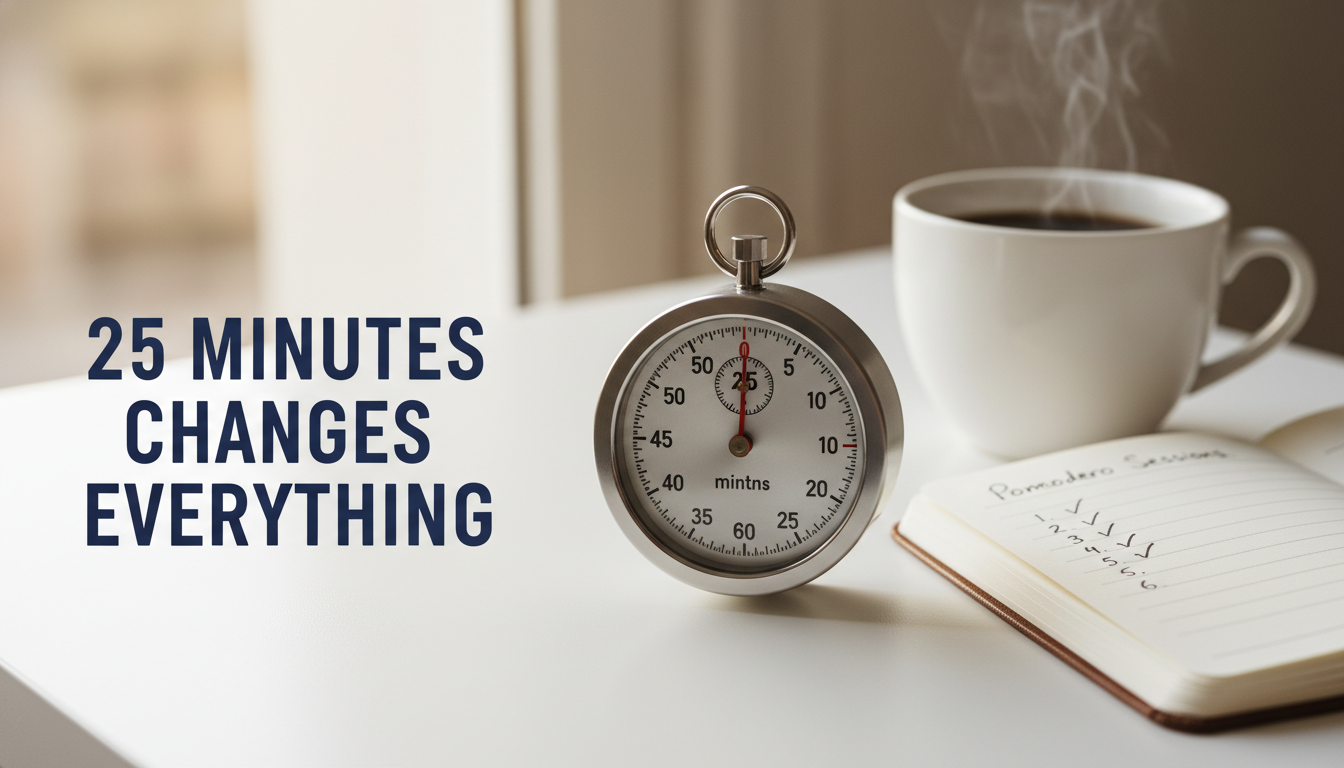
Deep Work for Junior Professionals: A Practical System
You have 47 unread Slack messages, a standup in 20 minutes, and a project that requires actual thinking. Sound familiar?
For early-career professionals, deep concentration feels like a luxury reserved for senior staff with closed-door offices and calendars they control. But the ability to do deep work for beginners is not a privilege — it's a learnable skill, and building it early is one of the highest-leverage investments you can make in your career.
Cal Newport, author of Deep Work, defines it simply: "Professional activities performed in a state of distraction-free concentration that push your cognitive capabilities to their limit." The people who master this, Newport argues, produce better work faster and become increasingly valuable. The good news? You can start building this system this week, regardless of your title, office layout, or Slack notification settings.
Why Junior Professionals Face a Unique Challenge
Senior employees can block their calendars, decline meetings, and set "do not disturb" hours without explanation. As someone early in your career, you face constraints they don't:
Open-plan offices with no physical barrier between you and interruption
Junior status that makes saying "I'm unavailable right now" feel risky
Fear of appearing disengaged — you don't want your manager to think you're ignoring messages
Fragmented days filled with onboarding tasks, ad-hoc requests, and learning curves
These are real constraints. A system that ignores them won't work. The approach below is designed specifically around them.
The Core Principle: Protect Blocks, Not Full Days
Newport's framework was written for tenured professors and senior executives. For you, the adaptation is simpler: you don't need deep work all day, you need 60-90 minutes of it, protected.
Most meaningful work — drafting a report, debugging a problem, learning a new tool, writing a proposal — can be meaningfully advanced in a single focused block. The goal isn't to disappear for hours. It's to create small, consistent windows where your brain can actually engage.
This is where focus block scheduling becomes your most practical tool.
Building Your Focus Block System
Step 1: Identify Your Peak Hour
Most people have one 90-minute window in the morning where their concentration is sharpest. For early-career professionals, this is often between 9–11 AM, before the day's chaos compounds.
Pay attention for one week. Notice when you feel mentally alert versus sluggish. That window is your deep work block.
Step 2: Schedule It Like a Meeting
Block 60–90 minutes on your calendar with a visible label — "Project Work," "Focus Block," or "Deep Work." Don't hide it. A visible block on your calendar communicates to teammates (and managers) that you're actively working, not absent.
Pro tip: Frame it as a productivity habit, not a boundary. "I batch my focused work in the morning so I'm sharp for collaboration in the afternoon" lands better than "I don't answer messages before 11."
Step 3: Use the Pomodoro Technique Inside Your Block
If 90 minutes of sustained focus sounds impossible — especially in a noisy environment — start smaller. The Pomodoro Technique, developed by Francesco Cirillo, structures work into 25-minute focused sprints followed by a 5-minute break.
Here's how to apply it:
Choose one task only — no multitasking
Set a timer for 25 minutes
Work on that task without switching apps, checking messages, or responding to non-urgent pings
Take a 5-minute break (stand up, step away from the screen)
After four pomodoros, take a longer 15–30 minute break
The Pomodoro Technique works for beginners because it makes the commitment feel manageable. "Can I focus for 25 minutes?" is a much easier yes than "Can I focus for 90 minutes?"
Managing the Open Office Problem
Open offices are specifically designed for collaboration — which makes concentration habits harder. Here's a practical toolkit:
Signal that you're in focus mode:
Wear headphones (even without music — it's a recognized "do not disturb" signal in most offices)
Use a physical signal if your team agrees on one: a small colored marker, a status indicator, a physical note
Set your Slack status to something like "Deep work block — back at 10:30" with an exact return time
Batch your communication:
Instead of responding to every message as it arrives, designate two or three response windows per day (e.g., 9 AM, 12 PM, 4 PM)
Newport recommends this approach on his blog at calnewport.com as a way to reduce the cognitive cost of constant context-switching
For urgent issues, establish a clear signal with your team — a phone call or a specific urgent tag — so people know how to reach you when something genuinely can't wait
Address the "looking unavailable" fear directly: Your goal is to demonstrate output, not presence. When you consistently deliver quality work, delayed responses become a non-issue. In fact, many managers view structured communication windows as a sign of professionalism, not disengagement — especially in remote or hybrid environments.
Handling the Concentration Habits You Haven't Built Yet
If you've spent years in school or previous jobs in reactive mode — always on, always responsive — deep focus will feel uncomfortable at first. That's normal.
Cal Newport's research suggests that the ability to concentrate is like a muscle: it atrophies without use and strengthens with deliberate practice. If you've been fragmenting your attention for years, 25 minutes of genuine focus may actually feel difficult.
A few practical tactics for building the habit:
Start with low-stakes tasks. Use your first focus blocks on work that matters but isn't your highest-pressure deliverable. Get comfortable with the feeling of sustained attention first.
Remove the digital on-ramps. Close your email tab. Move your phone to another surface. Quit Slack. Not forever — just for the block.
Track your blocks. A simple tally of completed focus sessions builds a chain of evidence that you're developing this skill. Cal Newport calls this "proof of depth."
For a deeper look at protecting your attention environment, the post "The Distraction Trap: How to Protect Your Focus in a World Designed to Steal It" in this series covers the environmental and digital factors that undermine concentration habits at work — worth reading alongside this one.
Your First Week Plan
You don't need to overhaul your schedule. Start here:
Day | Action |
|---|---|
Monday | Identify your peak focus hour |
Tuesday | Block it on your calendar for the rest of the week |
Wednesday | Complete one 25-minute Pomodoro on a meaningful task |
Thursday | Set a Slack status for your block; try two pomodoros back-to-back |
Friday | Review: How did it feel? What interrupted you? Adjust for next week |
The Long Game
Deep work for beginners isn't about being unreachable — it's about being intentional. The junior professionals who build concentration habits now will be the senior professionals who produce exceptional work later.
As covered in "Career Focus 101: How to Stay Productive AND Purposeful in Your First Job," focus is one of the core skills that separates early-career professionals who plateau from those who advance. The system above is the practical mechanism for building it.
Start with one block. Run one Pomodoro. Protect one hour.
The career edge you're building is compounding.
Frequently Asked Questions
What is deep work and why is it important for junior professionals?
How long should my deep work sessions be as a beginner?
What's the best time of day to schedule deep work blocks?
How do I handle deep work in an open office environment?
What is the Pomodoro Technique and how does it help with deep work?
Related Posts

AI + Careers Briefing — October 13, 2026

AI + Careers Briefing — October 12, 2026