AI Job Interviews in 2026: How to Prep for Every Round

AI Job Interviews in 2026: How to Prep for Every Round
The interview process has quietly split into two tracks. In one, a human eventually asks you questions and uses judgment to assess you. In the other — increasingly the first gate — an algorithm reads your resume, scores your video answers, and decides whether any human sees your application at all.
According to a 2026 survey of more than 900 U.S. hiring professionals, 96% now use AI in at least some recruiting tasks (Resume Now, via The Interview Guys' State of AI in Job Interviews 2026). A separate Resume Genius survey of 1,000 active job seekers found that more than 1 in 5 — 22% — admit to using AI assistance during a live, real-time interview. Both sides are using the tools. The rules for preparation have changed accordingly.
This guide covers every stage: AI-powered screeners, one-way video interviews, human rounds where AI briefed the interviewer, and the boundary between legitimate prep and behavior that can get you flagged.
Quick Answer: Preparing for an AI job interview in 2026 means optimizing your verbal answers for the keywords in the job description (not just for a human listener), structuring every response with STAR methodology, eliminating filler words that automated platforms flag, and understanding that the AI scoring your video likely does not see your face — it reads your transcript and scores your language for role-specific competencies.
Disclosure: This post contains affiliate links. If you make a purchase through these links, we may earn a small commission at no extra cost to you. We only recommend products we genuinely believe in.
How to Prepare for a Job Interview in 2026
Preparation in 2026 starts with identifying which type of interview you are actually facing. The pipeline typically runs: automated resume screen → AI-scored asynchronous video → phone or live video with a recruiter → panel or final-round human interview. Each stage requires different preparation.
Step 1: Map the stage. After you receive an interview invitation, identify the format. An email from HireVue, Spark Hire, or Willo signals an AI-scored one-way video. A Calendly link with a single recruiter is a phone screen. A multi-person Zoom invite is a panel.
Step 2: Extract keywords from the job description. AI screeners are scored against a competency rubric built from the job posting. Pull out role-specific verbs and nouns — "stakeholder management," "cross-functional collaboration," "data-driven decision making" — and use them in your answers as natural anchors, not stuffed buzzwords.
Step 3: Structure every answer with STAR. AI platforms score for response completeness. A 90-second answer ending with a measurable result ("reduced onboarding time by 30%") outscores a two-minute rambling response with no outcome. Practice out loud, not just in your head.
Step 4: Record yourself. Filler words ("um," "like," "you know") are detectable in automated transcripts. Watch your recordings for pace, pausing before answers rather than filling silence with noise, and eye contact with the camera lens rather than your own image on screen.
Step 5: Research the company in its own words. For human rounds, the interviewer may have been briefed by an AI summary of your profile. Know their language — mission statement, recent announcements, LinkedIn posts — and connect your experience to it specifically.
The One-Way Video Interview Survival Guide
One-way (asynchronous) video interviews are now a standard early-funnel step. You log in at a time you choose, see a question, get a short prep window (typically 30 seconds), and record your response (typically 2–3 minutes). No interviewer is present. An AI platform — most commonly HireVue, Spark Hire, or Willo — analyzes what you say.
What the AI actually scores (as of mid-2026):
HireVue phased out facial expression analysis in 2021 following pressure from researchers and civil liberties groups. As of 2026, the platform scores verbal content: word choice, competency language, specific examples, and response structure. Spark Hire's AI Review scores candidates on four competencies (Communication, Execution, Comprehension, English proficiency) and two personal qualities, rating each as Strong, Neutral, or Weak.
The practical upshot: The algorithm cannot see your expression, but it reads your transcript with precision. A 10-second structured pause before a focused answer outscores an immediate, rambling response.
Setup checklist:
Camera at eye level, lens clean
Natural light facing you, not behind you
Neutral physical background — virtual backgrounds still produce halo artifacts when you move
Wired internet or solid Wi-Fi confirmed before you start
Content checklist:
Use exact job-description phrasing at least once per answer
Lead with the direct answer, then the STAR context
State a measurable result in every behavioral response
End answers cleanly; do not trail off waiting for a cue that will not come
What the HBR Research Says About AI Evaluation
Research published in Harvard Business Review (July 2025) covering more than 13,000 participants across 12 studies found a consistent pattern: when candidates know an AI is evaluating them, they emphasize analytical traits and downplay qualities such as empathy, creativity, and intuition — even when the role requires those qualities.
This is usually a mistake. If the role involves client relationships, team leadership, or creative problem-solving, a transcript packed with analytical language at the expense of interpersonal language can lower your scores on those competency dimensions.
The practical correction: Review the job description for the balance of technical and interpersonal competencies before the interview. If the role is 60% execution and 40% leadership, your answers should reflect that ratio. Employers using AI assessment are being advised to pair automated scores with human reviewers precisely because of this self-presentation distortion — so your recorded performance will likely be reviewed by a person too, which reinforces the case for authentic, complete answers over purely keyword-optimized ones.
How to Prepare for a Job Interview Over the Phone
Phone screens in 2026 are often the first human conversation after AI filtering. The recruiter has likely read an AI-generated summary of your profile — the screen is less an information-gathering call and more a culture and communication fit check.
What recruiters assess: Can you summarize your background in two minutes without rambling? Do you know the company, or did you fire off 200 applications? Is your communication fluency appropriate for this role's stakeholder demands?
Practical prep:
Keep a cheat sheet visible: your 60-second summary, three professional wins, one specific thing you know about the company, your questions for them
Find a quiet room — not a car, not a coffee shop
Stand or sit upright; your vocal tone changes noticeably when slouched
If the phone screen is AI-automated (voice AI asking pre-set questions): treat it exactly like a one-way video — deliberate pace, direct answers, job-description vocabulary. Silence between sentences is fine; rushing to fill it is not.
How to Answer the Classic Interview Questions
The questions have not changed much. What has changed is that your first pass is now often scored by an algorithm, and the rubric is more explicit than any human reviewer's mental model.
"Tell me about yourself" — Follow a present-past-future arc: current role in one sentence, one or two relevant past experiences, why this specific role is the next logical step. Land at least two role-specific keywords in the first 30 seconds. Keep it to 60–90 seconds. AI platforms score for response structure and role alignment; so do human reviewers.
"Why do you want to work here?" — Read the company's own words before answering: career page, recent LinkedIn posts, last press release. Find a phrase that genuinely connects to your goals, then use their language. Vague answers ("amazing culture," "exciting growth") score lower on platforms tuned to detect generic language. A specific connection to a named initiative or challenge scores better with both bots and people.
"What are your weaknesses?" — AI platforms score this harshly for two failure patterns: the transparent non-answer ("I work too hard") and the over-rehearsed pivot that never names an actual weakness. The format that works: (1) state a real, specific weakness that is not a core job function, (2) name a concrete step you took to address it, (3) share a measurable result. Vague process changes ("I started being more mindful") score worse than specific ones.
"Can you ask for interview questions in advance?" — Yes, and it is reasonable. Many recruiters will share the interview format, competency areas, or a prep guide when asked professionally. For one-way AI video interviews, vendors like HireVue and Spark Hire publish sample questions publicly. Searching "[company name] HireVue questions" before your interview is standard preparation. Most platforms also include a practice question at the start — use it seriously.
Where Using AI Crosses Into Detectable Territory
There is a meaningful distinction between legitimate AI-assisted preparation and behavior that creates risk.
Clearly legitimate:
Using ChatGPT or similar to generate mock interview questions and practice answers
Using AI to analyze a job description and surface relevant competencies
Reviewing your recorded practice answers with AI feedback for filler words or structure gaps
High risk:
Using a real-time AI assistant on a second screen during a live video interview
Feeding real-time transcription with AI-generated suggested answers through a browser extension during the interview itself
Playing back pre-recorded AI-narrated answers to asynchronous video questions
Current AI-generated text detection is unreliable in most commercial contexts. But the behavioral signal is often visible to human reviewers: unnaturally formal language that does not hold up to a spontaneous follow-up, and response-timing patterns inconsistent with a person genuinely thinking. The more durable strategy is to use AI extensively before the interview, not during it.
Your Rights: AI Disclosure Laws in Hiring (as of Mid-2026)
Two jurisdictions have enforceable law. If you are a candidate in either area, you have rights worth knowing.
Illinois — HB 3773 (effective January 1, 2026), amending the Illinois Human Rights Act, requires employers to provide notice when AI is used to "influence or facilitate" employment decisions. Required disclosures include the AI product name and vendor, which employment decisions it influences, and what categories of personal data it processes. The companion Artificial Intelligence Video Interview Act (AIVIA) requires prior written consent before AI analyzes a video interview — continuing the interview alone no longer constitutes consent under the 2026 amendment.
New York City — Local Law 144 (enforcement began July 5, 2023) requires employers using Automated Employment Decision Tools (AEDTs) to conduct and publicly disclose annual bias audits covering race, ethnicity, and sex. Candidates must be notified that an AEDT is being used. Non-compliance penalties start at $500 per violation. A December 2025 audit by the New York State Comptroller found enforcement has been ineffective to date — but the law applies to NYC-based roles.
Outside these jurisdictions: most employers are not legally required to disclose AI use. You can ask directly — some recruiters will tell you.
For candidates preparing for technical roles, our technical interview preparation guide covers coding assessments and system design rounds, which follow different rules than behavioral AI screens.
How to Prepare for a Job Interview in English
AI screeners score English-language interviews on vocabulary, sentence structure, and comprehension signals. For non-native English speakers, the gap between written preparation and real-time spoken performance is the most common failure point in automated rounds.
The challenge is not grammar — it is the speed and spontaneity of spoken responses. A candidate with excellent prepared answers may hesitate, overuse simple connectors, or lose structure under time pressure in the actual recording.
What actually helps:
Practice answers out loud, not in writing — the AI scores the spoken version
Record yourself and watch the playback with the transcript on; notice where your spoken structure diverges from your prepared structure
Work with an English tutor who specializes in professional or business English and can run mock interviews in your field
Preply's English tutors include specialists in business and professional English who run interview simulations tailored to your industry. Sessions are one-on-one and bookable around your schedule — useful for compressed prep timelines.
Affiliate link — we may earn a commission at no extra cost to you.
The Bottom Line
The 2026 interview process is a hybrid system: algorithms filter first, humans decide last. Preparing well means understanding both layers — what the automated screen actually scores (transcript quality, keyword alignment, structural completeness) and what the human round assesses (judgment, communication, genuine fit).
The common thread across every stage: specific + structured + evidenced. Vague claims score poorly in every medium, and AI platforms enforce this more consistently than any human interviewer ever did.
For a deeper look at how AI is reshaping the full job search, see our guide on job searching in the AI era. For a longer-term view of which skills stay valuable as AI takes on more screening, our piece on skills that stay relevant as AI reshapes hiring covers the areas worth investing in now. And if your funnel is clogged with ghost listings before you ever reach the interview stage, how to spot and beat ghost job postings addresses that problem first.
Frequently Asked Questions
How do you prepare for a job interview in 2026?
How do you answer 'Tell me about yourself' in a job interview?
How do you answer 'What are your weaknesses?' in an interview?
How do you answer 'Why do you want to work here?' in an interview?
Can you ask for interview questions in advance?
Related Posts
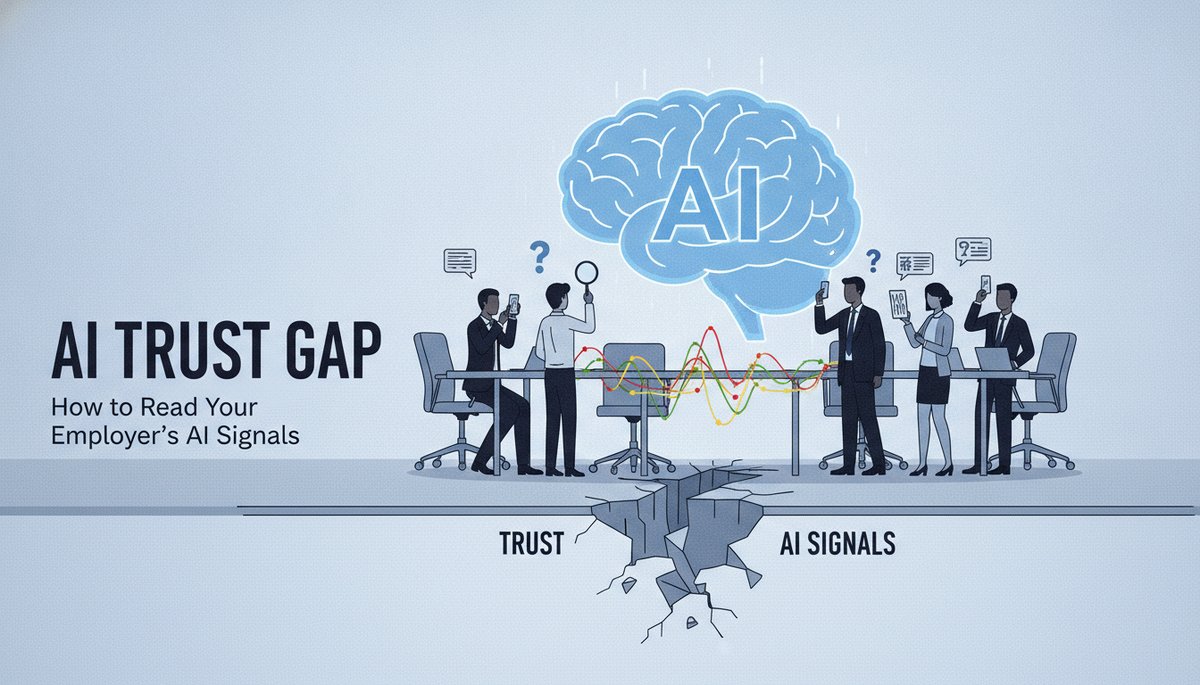
AI Trust Gap: How to Read Your Employer's AI Signals Before They Read You Out of a Job
Uber Faces Nearly $1B Fine Over Automated Driver Suspensions — What It Means for Job Seekers