
AI Agents Target Back-Office Work—What It Means for Office Roles
A new AI laboratory called Prentis is in talks to raise $100 million at a valuation of roughly $1 billion, according to reporting by TechCrunch published Friday. The lab, which launched in April 2026 and is backed by Reid Hoffman and Mark Pincus, is led by 31-year-old CEO Ritankar Das and has assembled a team of more than 25 researchers drawn from OpenAI, Google DeepMind, Meta, Tencent, and Alibaba.
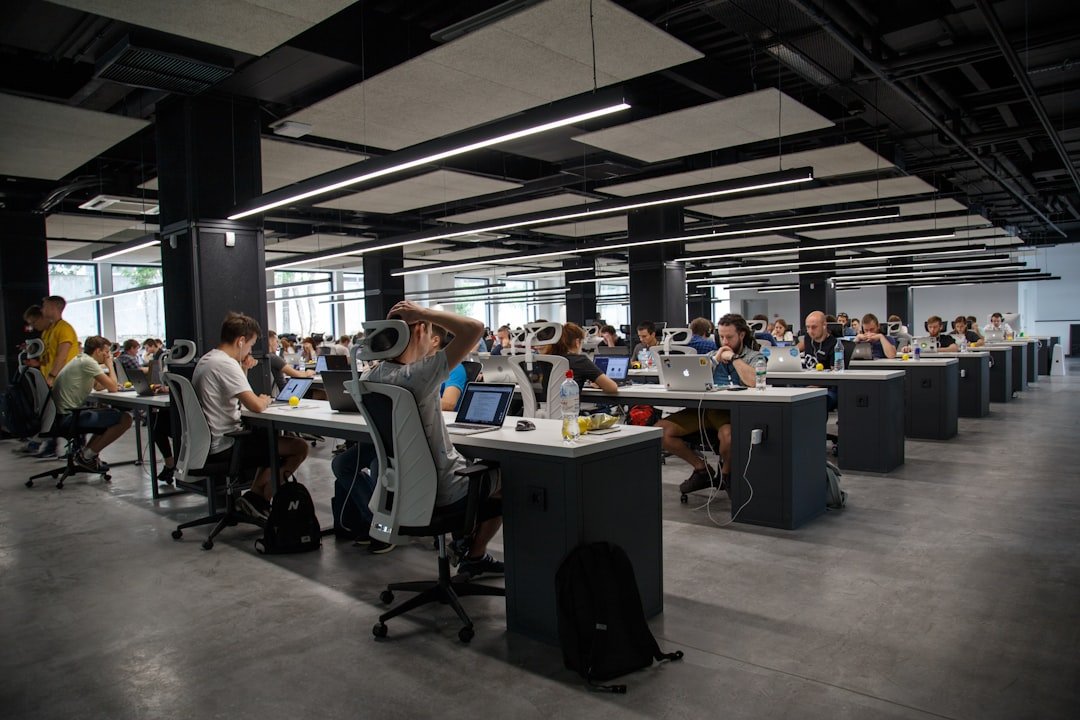
The pitch is specific: Prentis builds AI agents that control computers directly to handle routine back-office workflows — insurance claims processing, customs duty refund exceptions, and paperwork that moves across multiple software systems. The company told TechCrunch it has signed contracts worth up to $50 million with customers in healthcare management, manufacturing, and apparel.
The "computer use" wave is arriving fast
Prentis is entering a market that the largest AI labs have already flagged as a priority. In February 2026, Anthropic acquired Vercept, a startup whose entire focus was building AI agents capable of operating software the way humans do — clicking, scrolling, filling forms, navigating between applications. Anthropic's announcement described the goal as enabling AI to "take on multi-step tasks in live applications and solve problems impossible with code alone." OpenAI and Thinking Machines Lab, the company founded by former OpenAI chief technology officer Mira Murati, are pursuing similar capabilities.
What Prentis is betting on is that the biggest gains from computer-use agents will not come from general-purpose AI assistants but from systems purpose-built for the repetitive, rules-heavy workflows that define large portions of operations and administrative roles — the kind of work that rarely makes headlines but accounts for a significant share of corporate headcount.
What this means for job seekers
The honest read for anyone in administrative operations, claims processing, data entry, or document handling is that computer-use agents are specifically designed to automate the task sequences that make up the bulk of those roles. A system that can open an insurance claim, cross-reference policy documents, flag exceptions, and route approvals does not need to replace a person entirely to reshape the role significantly.
The more durable positions in this shift are the ones that sit adjacent to the automation rather than inside it. Exception handling — the cases the agent gets wrong or refuses to act on — requires human judgment and accountability. Oversight and audit work, configuring what the agent is allowed to do, and managing the edge cases that break workflows are all roles that grow in importance when the routine work disappears. For workers already in operations or administrative functions, reframing their expertise around quality control, escalation management, and agent supervision is the cleaner path than competing against a system designed for the repeatable parts of the job.
If you are assessing your own exposure, the useful question is not whether your title appears on an automation roadmap but whether the tasks filling your day are ones a well-documented workflow could describe step by step. Tasks that require negotiation, stakeholder communication, judgment under ambiguity, or accountability for outcomes remain outside what current computer-use agents handle reliably. Understanding which parts of your role fall into each category is the starting point — and our guide to AI-proof career skills covers how to identify and develop them.
Sources
Prentis, new AI lab co-founded by Reid Hoffman, Mark Pincus in talks to raise $100M — TechCrunch, accessed 2026-07-25
Anthropic acquires Vercept to advance Claude's computer use capabilities — Anthropic, accessed 2026-07-25
Related Posts

AI + Careers Briefing — October 16, 2026
AI + Careers Briefing — October 15, 2026