AI Schools Signal a Split in Education Careers
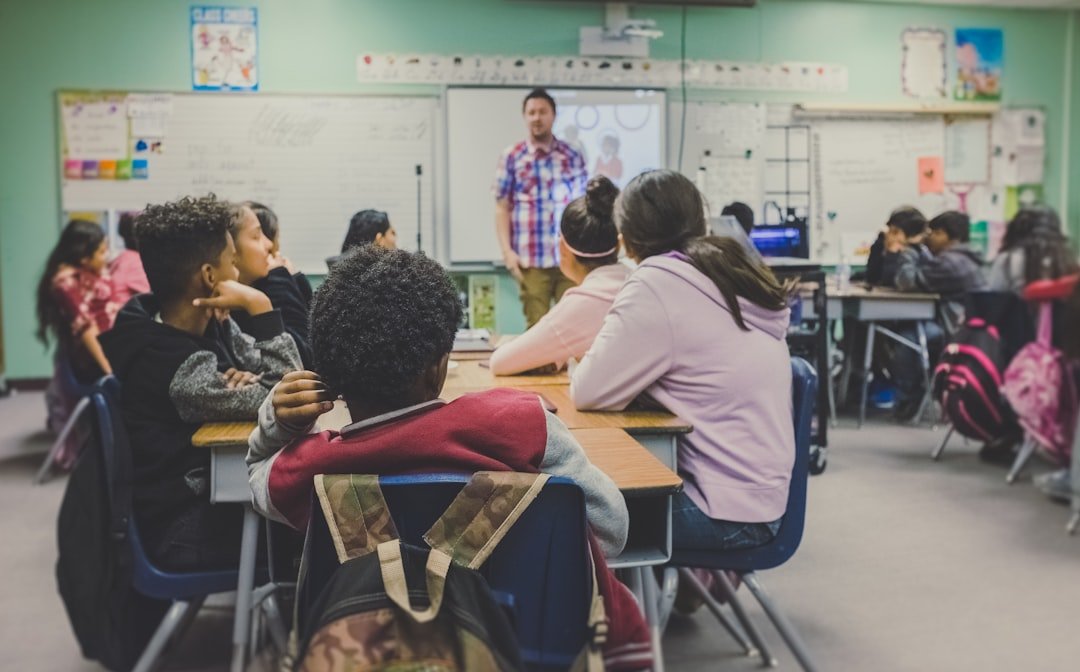
A small but growing set of private schools — backed by wealthy parents and, in some cases, Silicon Valley money — are replacing classroom teachers with AI tutoring software and human "guides." Alpha School charges $75,000 a year at its San Francisco campus for that model, and a new entrant, Forge Prep, is set to open its first campus in Livingston, New Jersey this fall. The Verge reported on the trend this week, noting that schools like these share no independent performance metrics with prospective families.
Alpha School, which now operates 13 campuses across the country, structures its day so students spend roughly two hours on AI-powered adaptive learning software in the morning, then move on to workshops, life skills, and project time in the afternoon. The adults in the building carry the title "Guides" — their role is described as mentoring and emotional support, not subject instruction. The school's performance claims rest on internal analyses of NWEA MAP assessments; according to Wikipedia's summary of the school, the Pennsylvania Department of Education characterized the model as "untested," and charter applications have been denied in Pennsylvania, North Carolina, Arkansas, and Utah.
Forge Prep is taking a different angle. Its founder, Anand Sanwal — formerly the CEO of CB Insights — retrained as a Montessori adolescent teacher before launching the school, according to reporting by The Montclair Pod. The school emphasizes project-based, cross-disciplinary learning and is launching with approximately 30 founding families. Like Alpha, Forge Prep uses the term "long-term guides" for its adult staff, with the same explicit move away from lecture-delivery as the core teacher function.
What this means for job seekers
The "guide" rebranding at these schools is more than a marketing choice — it describes a structural unbundling of what teaching has historically required. Instruction is handed to software; the human role narrows to facilitation, mentoring, and learning supervision. That shift is small in absolute numbers right now — these are high-tuition private schools serving a few hundred students total — but the design philosophy is spreading into ed-tech hiring more broadly.
For job seekers considering education careers, reviewing how the AI era is reshaping professional roles is useful context here. What these schools are testing is a version of the same pattern appearing across sectors: AI handles repeatable task delivery, humans handle adaptation, relationship, and judgment. In education specifically, that means coaching credentials, social-emotional learning expertise, and the ability to monitor and interpret AI-generated student data are becoming more defensible skills than subject-matter lecture delivery alone.
The missing performance data is a practical caveat. Without independent verification of outcomes, it is difficult to know whether the model produces better-educated students or merely better-marketed ones. For anyone considering a career pivot into ed-tech or alternative schooling, that ambiguity cuts both ways: early entrants into a model that does prove effective will have a genuine head start, but joining an experiment that fails publicly carries real reputational cost. The elite parentage funding these schools does not make them right — it makes them well-resourced bets on a future that has not yet arrived.
Sources
Some of the nation's rich are letting AI teach their kids — The Verge, accessed 2026-07-06
Alpha School: AI-powered private school expanding Bay Area footprint — ABC7 News, accessed 2026-07-06
Alpha School — Wikipedia — Wikipedia, accessed 2026-07-06
Rethinking Education for the Future: A Conversation with the Founder of Forge Prep — The Montclair Pod, accessed 2026-07-06
Related Posts

AI + Careers Briefing — October 13, 2026

AI + Careers Briefing — October 12, 2026