Meta AI burnout report is a vetting checklist for job seekers
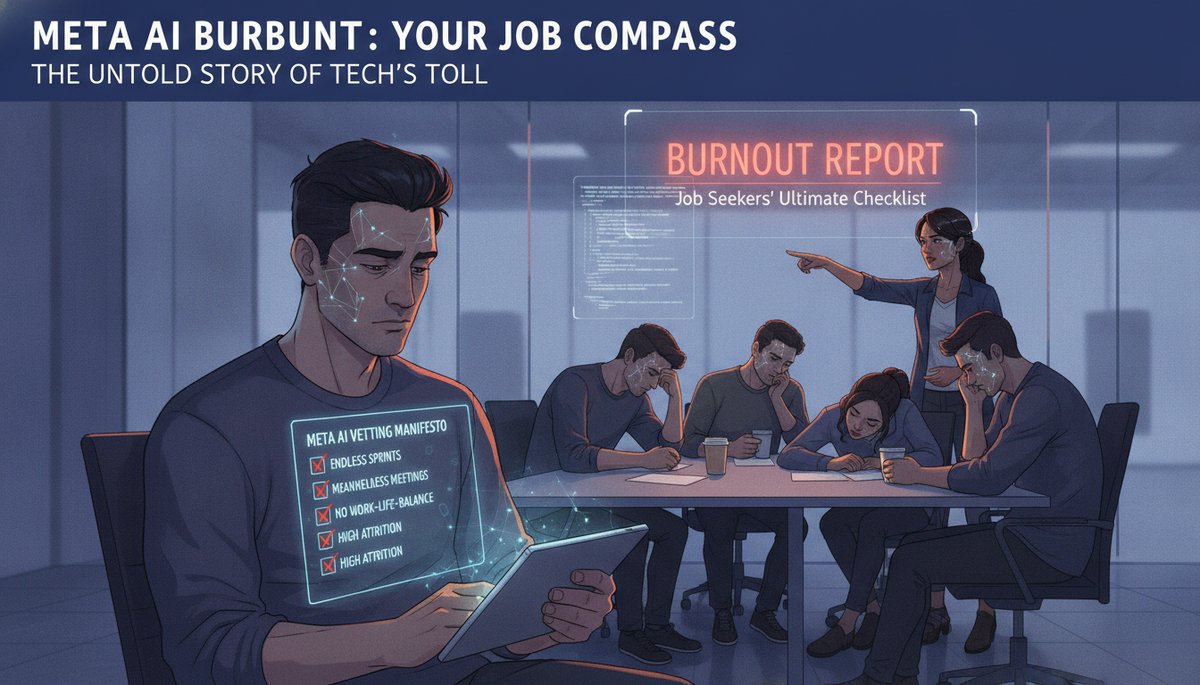
Meta's roughly three-month-old Applied AI team, a unit of about 6,500 engineers and product managers, is drawing complaints from inside the company that the work is "soul-crushing" and that some employees were drafted into it with little choice, according to a TechCrunch report published Friday by Connie Loizos.
The unit is led by Maher Saba, a 12-year Meta veteran and former vice president of Reality Labs, and reports up to Chief Technology Officer Andrew Bosworth. Its core task is generating puzzles and coding problems used to train Meta's AI models.
Context
TechCrunch reported that the team was initially structured with up to 50 direct reports per manager, and that many of its members were notified of their reassignment by surprise email. Workers inside the unit have started calling themselves "draftees," and one description quoted in the reporting compared the experience to "the gulag."
The reorganization sits inside a broader push at Meta. Chief Executive Mark Zuckerberg has elevated AI to the company's top priority, hired Scale AI founder Alexandr Wang as Chief AI Officer following a $14.3 billion deal involving Scale, and continued multi-year layoffs that have accelerated alongside the AI investment. Chris Cox remains Chief Product Officer.
The discontent also extends beyond the Applied AI team. More than 1,600 Meta employees signed a petition protesting a separate program that uses keystroke and click data to train AI models, according to TechCrunch's reporting.
What this means for job seekers
For job seekers weighing a high-comp AI offer, the Meta story is less a Meta story than a vetting checklist. Big AI budgets are buying a lot of headcount very quickly, and the org charts those hires land in are often weeks old. That is a real risk factor that base salary, equity refreshers, and signing bonuses do not price in.
A few questions are worth asking on-site, ideally of the hiring manager and at least one peer engineer. How old is the team, and how was it formed: was it built around a charter, or assembled from internal transfers? What is the day-to-day work — model research, applied product, or data labeling and eval generation dressed up in a fancier title? How many direct reports does the manager have, and how often has the reporting line changed in the last six months? What is the attrition rate inside the group, and where do people go when they leave?
Compensation is easy to compare across offers. Culture, scope, and manager stability are not, and they are where the gap between a great AI role and a burnout role usually opens up. Our interview prep guide covers how to work these questions into a normal-sounding interview conversation, and our broader job search in the AI era post lays out how to read a team's actual roadmap from public signals before you ever take the call.
The current AI hiring wave will not last forever. Treating an offer like an investment decision — diligence first, signature second — is the cheapest insurance available.
Sources
"Meta's months-old AI unit is a soul-crushing gulag, say the engineers stuck inside it" — TechCrunch, https://techcrunch.com/2026/06/12/metas-months-old-ai-unit-is-a-soul-crushing-gulag-say-the-engineers-stuck-inside-it/ (accessed 2026-06-13)
Related Posts

AI + Careers Briefing — October 13, 2026

AI + Careers Briefing — October 12, 2026