
a16z's $1.1B 'Machine Age' Fund Signals a Shift From AI Code to AI Concrete
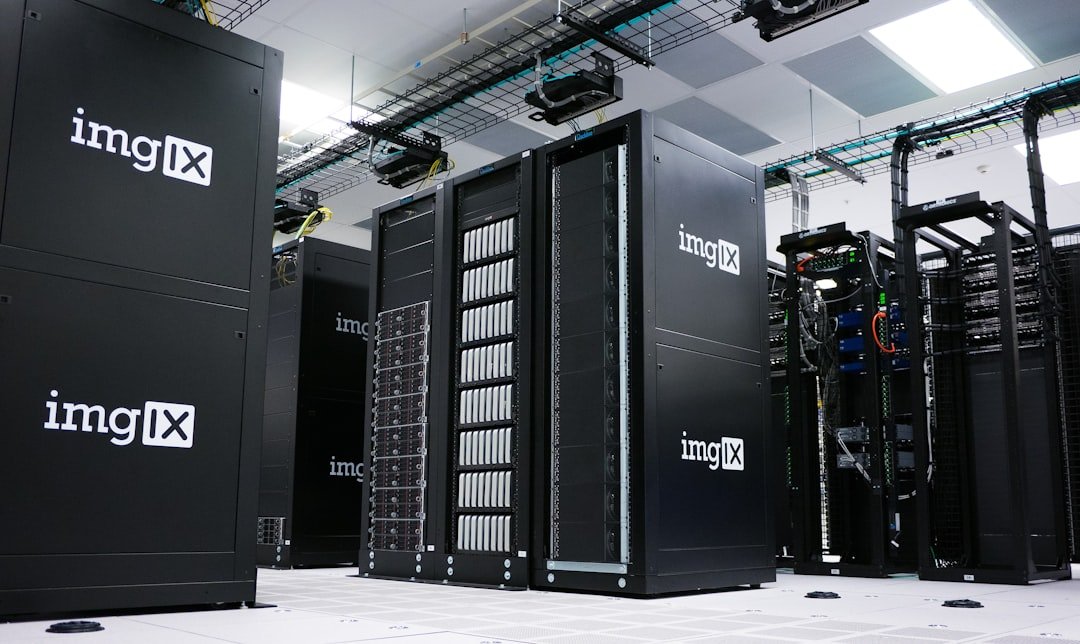
Andreessen Horowitz, one of Silicon Valley's most influential venture firms, has raised a $1.1 billion fund dedicated entirely to the physical infrastructure behind artificial intelligence — not software, but the chips, memory, data centers, robots, cooling systems, materials and electrical systems that keep AI running, TechCrunch reported August 28.
The new vehicle, called the Machine Age Fund, marks a notable pivot for a firm long associated with backing software startups. In the announcement, a16z said the goal is to "accelerate the physical buildout of AI," pointing to the strain that AI's growth is putting on real-world systems: "We need faster, more efficient systems. We need cheaper and higher-bandwidth memory across the memory hierarchy."
TechCrunch's report does not mention hiring plans, job counts, or workforce projections tied to the fund. But the fund's very existence is a signal worth reading for job seekers: a wave of venture capital that size, aimed squarely at physical infrastructure, tends to flow toward companies that build, install, cool, wire and maintain that infrastructure — not just the ones writing the AI models themselves.
What this means for job seekers
The AI jobs conversation has mostly centered on software engineers, data scientists and prompt specialists. A $1.1 billion bet on the "physical buildout of AI" points to a parallel track that gets far less attention: the people who build and run the buildings, power grids and hardware that make AI possible in the first place.
That track includes roles that don't require a computer science degree. Data center construction and operations need electricians, HVAC and cooling technicians, industrial engineers and facilities managers. Chip and memory manufacturing needs process technicians and quality-control specialists. Robotics deployment — explicitly named in a16z's fund thesis — needs mechanical technicians, systems integrators and maintenance crews, not just robotics PhDs.
None of this is guaranteed by one fund announcement, and TechCrunch's report offers no hiring numbers to point to. But it fits a pattern job seekers should track: as AI investment matures beyond pure software, the skills in demand increasingly overlap with skilled trades, industrial operations and infrastructure management — fields that are traditionally overlooked in "AI career" advice.
For anyone worried that an AI career requires learning to code, this is a reminder to widen the search. Look at job postings from data center operators, chipmakers and industrial contractors, not just AI labs. Certifications in electrical work, HVAC, industrial automation or facilities operations may become more directly relevant to the AI economy than a general coding bootcamp. If you're weighing what to learn next, our guide to AI-proof career skills breaks down which capabilities hold up regardless of which layer of the AI stack — software or hardware — ends up growing fastest.
The bigger takeaway: AI's labor market isn't just splitting into "coders" and "everyone else." It's splitting into the people who build AI's brain and the people who build AI's body — and the second group is now attracting billion-dollar bets of its own.
Sources
- a16z creates a $1.1B 'Machine Age' fund to 'accelerate the physical buildout of AI' — TechCrunch
- The Machine Age Fund — Andreessen Horowitz
Related Posts

AI + Careers Briefing — October 22, 2026

AI + Careers Briefing — October 21, 2026